
Ant Control in Pasadena, CA: Stop Trails, Remove Colonies, Prevent Re-Infestation
If you’re seeing ant trails in the kitchen, ants near sinks, or activity around baseboards and
windows, you’re not alone. In Pasadena and across the San Gabriel Valley, ant pressure often increases when
weather patterns shift—including rainfall cycles, soil moisture changes, vegetation overgrowth,
and shrubs/trees creating “bridges” to structures. Ants don’t need much space to enter; once a colony finds
dependable food or moisture, activity can escalate quickly.
This page is designed to help homeowners and property managers understand why ants invade,
what actually works to eliminate colonies (not just the ants you see), and how to reduce conditions that attract
ants in the first place.
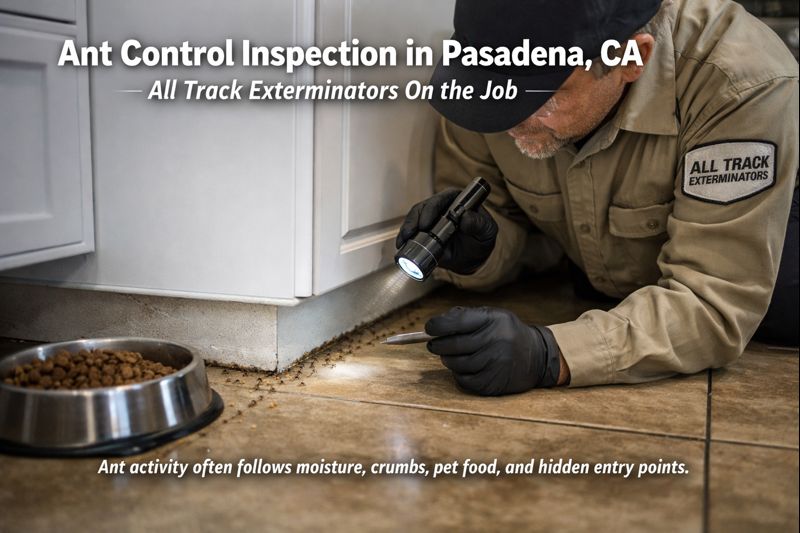
Why Ants Invade Pasadena Homes
Ants are highly organized, social insects that forage constantly. Most infestations are driven by a simple
equation: access + attraction + hidden nesting.
- Moisture access: leaks, condensation, irrigation overspray, damp soil near foundations
- Food access: crumbs, sugar, grease, trash liners, pet food bowls, fruit, pantry spills
- Environmental shifts: rainfall cycles, heat swings, vegetation overgrowth and ground cover
- Structural entry: gaps at windows/doors, weep screed, utility penetrations, slab cracks
- Trail behavior: ants lay scent trails; wiping visible ants without removing the colony rarely solves it
The key point: the ants you see are usually scouts or foragers. The nest and queens are often
hidden in wall voids, under slabs, planter edges, mulch lines, or landscaping near the structure. Effective
ant control targets the colony—not only surface activity.

Common Ant Problems We See in Pasadena
Different ants behave differently. Accurate identification matters because the treatment strategy should match
the species and nesting habits.
- Odorous house ants: indoor trails to sweets, nesting near moisture
- Argentine ants: heavy trails, multiple nesting sites outdoors, persistent reinfestation risk
- Pavement ants: nests in cracks/under slabs; activity near driveways and foundations
- Carpenter ants: associated with moisture-damaged wood; may indicate underlying wood issues
If you’re not sure what you have, that’s normal—our inspection focuses on trail mapping,
entry points, and likely nesting zones to choose the right approach.
What Actually Works to Get Rid of Ants
The fastest results come from a colony-focused plan that combines inspection, targeted treatment,
and prevention. Sprays alone often scatter activity or create short-term relief without solving the nest source.
1) Professional Inspection + Trail Mapping
- Locate active trails and entry points (kitchen, bathroom, windows, baseboards)
- Check moisture sources: sinks, water heaters, irrigation zones, exterior hose bibs
- Identify likely nesting areas: mulch edges, planters, cracks, wall void access
2) Colony Treatment (Target the Nest)
- Baiting strategy: designed to be carried back to the colony
- Non-repellent treatments: avoids “pushback” and supports colony transfer
- Exterior perimeter focus: reduces re-entry pressure from landscaping and foundations
3) Prevention (Stop the Conditions That Invite Ants)

- Seal gaps around pipes, windows, doors, and foundation transitions
- Trim shrubs/branches that touch structures (bridging)
- Reduce moisture and standing water; adjust irrigation patterns
- Store sweets and pantry foods in airtight containers; clean residue quickly
Quick Ant Prevention Checklist for Pasadena Homes
- Wipe counters nightly; don’t leave pet food out overnight
- Rinse recyclables; use sealed trash bins
- Fix drips under sinks; check for condensation
- Keep mulch and ground cover from touching siding/foundation edges
- Trim vegetation away from rooflines and entry points
- Seal small gaps with appropriate caulk or weather stripping
When to Call an Ant Exterminator
Consider a professional inspection if any of these are true:
- Trails return within 24–72 hours after cleaning or store sprays
- Ants appear in multiple rooms (kitchen + bath + bedrooms)
- You see activity around plumbing areas, wall edges, or electrical outlets
- Outdoor activity is heavy near foundation lines, planters, or slab cracks
- You suspect carpenter ants or moisture-damaged wood conditions
Local Service Area: Pasadena + San Gabriel Valley
All Track Exterminators provides ant control and broader pest management across Pasadena and nearby communities.
If you’re also dealing with mixed pests, see our service hubs:
Pest Control Pasadena Specialists
Rodent Control Services
Termite Control Services
Schedule an Ant Inspection
If you’re seeing recurring trails or indoor activity, the fastest path to relief is identifying the entry points
and nesting zones and applying a colony-focused treatment plan.
All Track Exterminators
1055 E Colorado Blvd, Pasadena, CA 91106
(626) 344-2464
https://www.alltrackexterminators.com/
Ant Exterminator vs Pest Control: What’s the Difference?
The terms exterminator and pest control service are often used interchangeably,
but they describe slightly different approaches. Pest control generally refers to managing and reducing pest
populations through inspection, monitoring, and prevention strategies.
An exterminator typically focuses on identifying active infestations and eliminating the source—such as an ant
colony—using targeted treatments. In practice, professional ant control combines both approaches: eliminating
existing colonies while addressing the conditions that allow ants to return.
Ant Control FAQ
Is ant control the same as extermination?
Ant control and extermination are closely related but not identical. Extermination focuses on eliminating active
ant colonies, while ant control includes identifying entry points, reducing attractants, and preventing future
infestations. Effective ant management typically combines both approaches.
Do I need an exterminator or pest control service for ants?
If ants are repeatedly appearing indoors or forming visible trails, a professional inspection is recommended.
A licensed pest control provider or exterminator can determine where ants are entering, locate nesting areas,
and apply a targeted plan to eliminate colonies and reduce re-infestation.
Why do ants keep coming back even after I clean?
Cleaning removes food residue, but it doesn’t remove the colony. Many ants follow scent trails and can enter
through tiny gaps. If the nest remains active outdoors or in a wall void, activity returns quickly.
Are ants attracted more to sweets or protein?
It depends on the colony’s current needs. Some infestations respond better to sweet baits, others to protein-based
options. That’s why correct bait selection is important for colony transfer.
Do I need treatment inside the home?
Not always. Many ant problems are driven by outdoor colonies and entry points. A professional inspection determines
whether interior treatment is necessary or if an exterior-focused plan will resolve the issue.
What’s the fastest way to stop indoor trails?
Immediate reduction often comes from cleaning residue, removing food access, and using a targeted approach that
supports colony elimination—rather than repellent sprays that can scatter activity.
Can ants cause damage?
Some species, such as carpenter ants, can be associated with moisture-damaged wood. More commonly, ants create
persistent contamination and nuisance issues by traveling through kitchens and pantries.


