The Hidden Danger in Your Attic: Health Hazards of Contaminated Attic Insulation
Many Pasadena homeowners don’t realize that a rodent problem often continues long after the animals are gone.
When rats or mice nest in an attic, they can leave behind droppings, urine, nesting material, and disturbed insulation.
Over time, that contamination may affect indoor comfort and air quality—especially when attic air mixes with living spaces through
ceiling penetrations, recessed lights, ducting, and access hatches.
This page explains how attic insulation becomes contaminated, what warning signs to look for, why cleanup matters,
and how a complete plan typically includes both rodent exclusion and sanitation/insulation restoration.
What “Contaminated Attic Insulation” Means
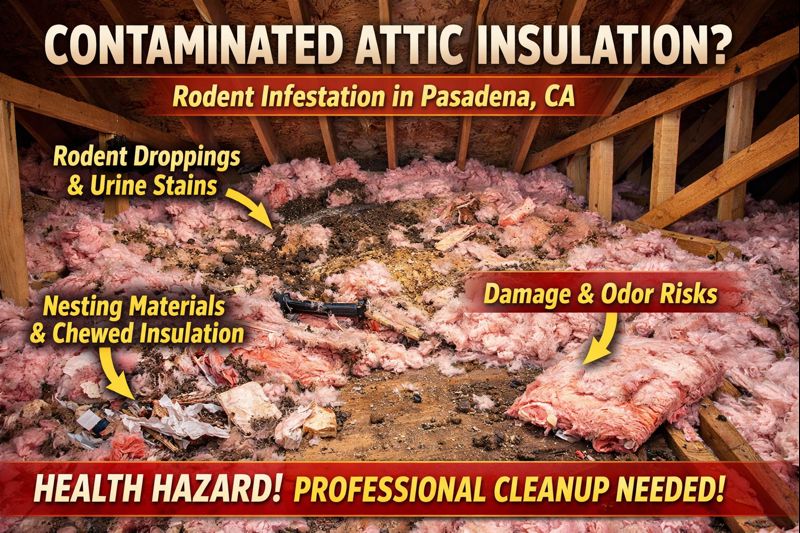
Attic insulation becomes “contaminated” when rodent activity introduces biological debris and disrupts the insulation layer.
This can include droppings, urine staining, nesting material, and tracked debris across insulation surfaces.
Even small, repeated activity can create widespread impact because rodents travel along consistent run paths.
- Droppings and urine: contamination along runways, corners, and nesting sites
- Nesting material: shredded insulation, paper, fabric, or stored items pulled into nests
- Disturbed insulation: compressed or displaced insulation reducing thermal performance
- Odor and staining: persistent smells or darkened patches that can spread
Why It Matters for Home Health and Comfort
Contaminated insulation is not just “messy.” It can become a source of unpleasant odors and may contribute to
airborne particulates when insulation is disturbed by airflow, maintenance work, or ongoing pest activity.
Homes with ducting in attics, ceiling gaps, or frequent HVAC cycling may be more likely to experience attic-to-living-space transfer.
Important note: If anyone in the home has respiratory sensitivities or unexplained irritation, it’s wise to consult a qualified medical professional.
This page provides educational information about common contamination conditions and typical remediation steps.
Signs Your Attic Insulation May Be Contaminated
- Persistent attic or “musty” odors that return even after cleaning living spaces
- Scratching or movement sounds above ceilings, especially at night
- Droppings near attic access, along rafters, or near stored items
- Dark rub marks on beams or along repeated travel paths
- Insulation disturbance—flattened lanes, “tunnels,” or pulled insulation around nesting areas
- Ceiling staining or localized odor near vents and recessed lighting
Why DIY Cleanup Can Backfire
Many homeowners try to vacuum droppings or remove soiled insulation without proper containment or protective measures.
That can disturb contamination and spread debris. In addition, if entry points are not sealed first, rodents can re-enter
and contaminate the attic again—wasting time and money.
A complete plan typically follows a sequence: inspect → exclude → sanitize → restore.
A Practical, Professional Approach: Inspect → Exclude → Sanitize → Restore
1) Inspection and Evidence Mapping
- Identify active vs. past rodent activity
- Locate nesting zones, run paths, and contamination concentrations
- Evaluate insulation condition and ventilation/airflow factors
2) Rodent Exclusion (Stop Re-Entry)
- Seal structural gaps, roofline access points, and utility penetrations
- Address “bridging” from vegetation or storage near the structure
- Reduce repeat entry pressure with targeted exterior defenses
3) Attic Sanitation and Contamination Reduction
- Remove contaminated material using appropriate containment practices
- Sanitize affected areas to reduce odor and residual debris
- Identify secondary pest risks (insects attracted to nests/organic material)
4) Insulation Restoration (Performance + Comfort)
- Restore insulation levels to support thermal efficiency
- Improve comfort consistency room-to-room
- Reduce conditions that make attics attractive to pests over time
Why Pasadena and the San Gabriel Valley See This Problem Often
In Pasadena and nearby communities, factors like mature landscaping, older rooflines, shared utility runs, and seasonal environmental shifts
can increase rodent pressure. When rodents nest in attics, insulation contamination becomes a common “second problem” that must be addressed
to fully resolve the situation.
When to Schedule an Attic Inspection
Consider a professional inspection if:
- Odors persist and seem strongest near ceiling penetrations or vents
- You’ve had rodent activity before and never addressed attic cleanup
- You see droppings, insulation disturbance, or staining in the attic
- Rodents were removed but the attic was never sanitized/restored
- You suspect multiple pest layers (rodents + insects attracted to nesting debris)
Related Service Pages
For broader service context and remediation options, see:
Request an Inspection
If you suspect attic contamination, the most reliable next step is an inspection that identifies
entry points, contamination zones, and the correct sequence for exclusion and cleanup.
All Track Exterminators
1055 E Colorado Blvd, Pasadena, CA 91106
(626) 344-2464
https://www.alltrackexterminators.com/
FAQ: Contaminated Attic Insulation
Can rodents contaminate attic insulation even if I don’t see them anymore?
Yes. Droppings, urine staining, and nesting debris can remain long after rodents leave or are removed.
If entry points were not sealed, re-entry can also occur without obvious daily signs.
What are common warning signs of insulation contamination?
Persistent odors, droppings, disturbed insulation lanes, dark rub marks, and ceiling staining near vents or penetrations
are all common indicators that an attic should be evaluated.
Why is exclusion important before insulation cleanup?
If entry points remain open, rodents can return and contaminate the attic again. Exclusion helps stop the source
of the problem so cleanup and restoration efforts are not wasted.
Does contaminated insulation affect home comfort?
It can. Rodents compress and displace insulation, reducing thermal performance and making some rooms harder to heat or cool.
Restoring insulation levels can help stabilize indoor comfort.
Can leftover nests attract other pests?
Yes. Nesting debris and organic material can attract insects and other pests, creating layered infestations.
Removing contamination and reducing attractants helps prevent secondary pest activity.


