

Local termite inspection SGV City areas & wood destroying organism preventive protection • Pasadena, CA • San Gabriel Valley
Pasadena Termite Control: Why Moisture Damage Is the First Thing a Seasoned Inspector Looks For
Inspection-first guidance for Pasadena homeowners: moisture history, repairs, and preventive termite protection — including non-tenting options when appropriate.
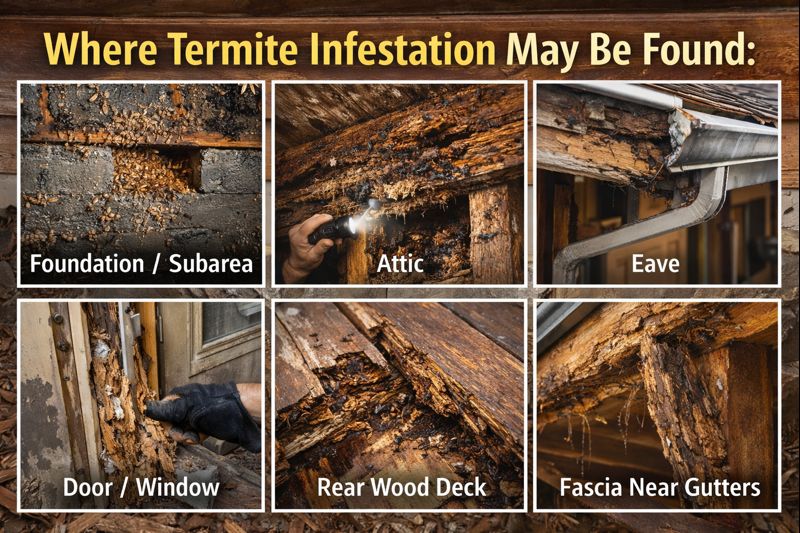
When homeowners think about termites, they often picture visible damage — hollow wood, blistered paint, or
structural repairs that can no longer be ignored. In reality, termites rarely begin where the damage is obvious.
They begin where moisture has already changed the environment.
For experienced termite inspectors, moisture damage is not a side issue. It is the first condition evaluated —
because without moisture, termites struggle to establish, survive, and spread within a structure.
Understanding this relationship is the difference between reacting to damage and preventing it altogether.
Why Moisture Comes First in Termite Inspections
Termites do not randomly select homes. They follow conditions.
Excess moisture softens wood fibers, increases fungal growth, and alters the structure of framing, fascia,
subfloors, and attic components. These changes make wood easier to penetrate and far more attractive to termite
colonies during swarming and expansion.
In Pasadena and throughout the San Gabriel Valley, moisture conditions often develop long before termites are
discovered — sometimes years earlier.
Common moisture sources that increase termite risk include:
- Roof leaks that were repaired but not fully evaluated
- Plumbing failures or laundry room floods
- Bathroom or shower leaks inside walls
- Overflowing or poorly drained gutters
- Stucco cracks allowing water intrusion
- Decks, balconies, and porches retaining moisture
- Foundation or sewer repairs that disturbed surrounding soil and framing
Once moisture enters structural wood, the environment changes — even after the visible issue appears resolved.
The Problem With “Repair-First” Discoveries
Many termite infestations are discovered incidentally during painting, pressure washing, roofing, gutter work,
or trim replacement. At that point, the sequence is already backwards.
Repairs may address the surface problem, but they often seal over conditions that allowed termites to begin in
the first place. Fresh wood installed after water damage can accelerate termite activity if the underlying
moisture pathway remains.
This is why seasoned inspectors evaluate moisture history before repairs, not after.
Why Termite Damage Can Remain Hidden for Years
Termites prefer concealed pathways: wall voids, attic framing, subfloor supports, rooflines and eaves, and
transitions between old and new materials. Moisture allows colonies to establish quietly, protected from light
and disturbance.
In some cases, a colony remains undetected for years until structural stress, rainfall, or remodeling exposes
the damage. By the time visible signs appear, prevention is no longer the option — only correction.
Inspection-First Termite Control in Pasadena
Effective termite control begins with evaluation, not treatment. A proper inspection looks beyond “active
termites” and examines the environmental history that enables long-term risk.
Inspection-first planning asks:
- Where has moisture entered the structure — now or in the past?
- What repairs were made, and was surrounding wood evaluated?
- Are there repeated damp zones, condensation, or airflow-related moisture?
- Do exterior conditions push water toward structural wood (rooflines, gutters, decks, cracks)?
Local note: Pasadena homes vary widely — historic framing, layered remodels, and additions can create hidden moisture pathways. A local inspector familiar with Pasadena and SGV construction can often identify risk patterns faster and more accurately.
Preventive Termite Treatments Without Tenting
Not all termite protection requires fumigation. Preventive and localized treatments can be applied to exposed
or vulnerable wood areas to reduce long-term selection pressure — especially when conditions are identified
early.
Many preventive approaches do not require tenting, move-out, or bagging. The appropriate scope depends on
inspection findings and moisture history.
When Timing Matters During Repairs
When termite conditions are discovered during repairs or inspections, timing matters.
In many cases, same-day or next-day inspection availability allows homeowners to confirm conditions before work
continues, preventing delays and unnecessary costs — especially when exterior painting, roofing, or plumbing
projects are already scheduled.

A Better Way to Protect Your Home
Termites rarely announce themselves. Moisture does.
Addressing moisture pathways, evaluating structural wood before repairs, and applying preventive protection is
how long-term damage is avoided — not discovered too late.
This is why seasoned inspectors begin with moisture, not insects.
Need an inspection-first termite evaluation in Pasadena or nearby SGV areas?
Call 626-344-2464 or visit the termite service hub:
alltrackexterminators.com/termite-control/
FAQ
(NOTE) Click on the question to expand the answer
Do you offer same-day termite inspections in Pasadena?
Same-day or next-day termite inspection availability depends on scheduling and location within Pasadena and nearby San Gabriel Valley communities. When possible, inspection-first timing helps homeowners avoid delays during active repairs.
Do termite treatments always require tenting?
No. Many preventive and localized termite protection approaches do not require tenting, move-out, or bagging. The appropriate scope depends on inspection findings, moisture history, and exposure areas.
Why does moisture matter so much for termite risk?
Moisture can soften wood fibers, increase fungal activity, and create conditions that make structural wood easier for termites to enter and use. Leak history and damp zones often explain where termite risk concentrates over time.


