ATE Property Knowledge Series | Ant Briefing
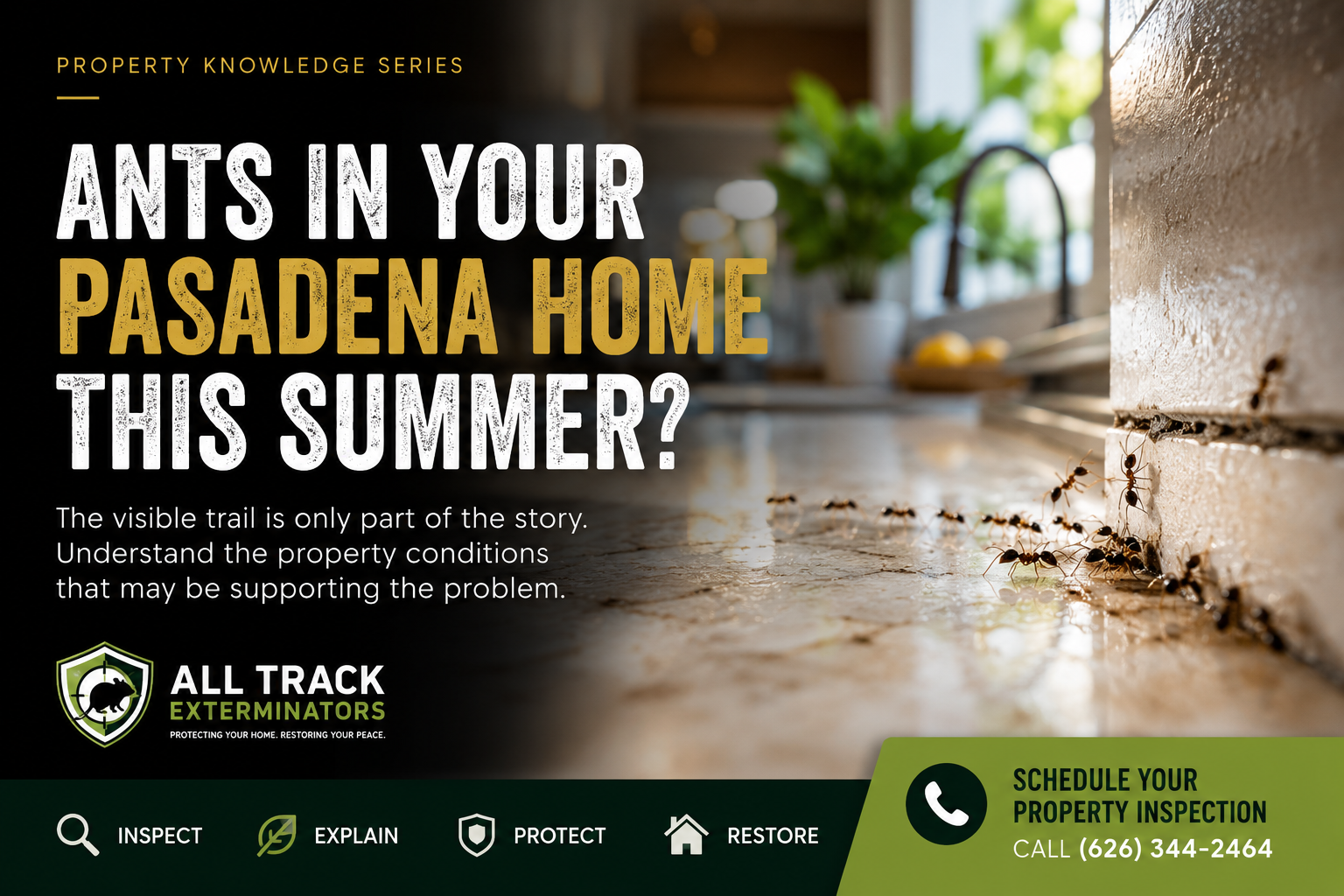
Ants in Your Pasadena Home This Summer?
What you are seeing inside the kitchen, bathroom, or living space may be the result of years of property conditions building outside the structure.
Pasadena Ant Exterminator Search Topics Covered
This property briefing directly addresses the following exact homeowner search phrases:
Ants to Pasadena Homes Every Summer Exterminators Service
Ants Invade Pasadena Homes Property Conditions Exterminator Behind Summer Ant Problems
Ant Exterminator For Your Pasadena Home This Summer and What Your Property May Be Telling You
Seeing Ants Inside Your Home?
The visible trail may only be part of the story. Schedule a property inspection to understand what conditions may be supporting ant activity around your home.
In This Property Briefing
- Why ants keep coming back to Pasadena homes every summer
- Why ants choose certain Pasadena properties every summer
- The hidden reasons ants invade Pasadena homes during summer
- Why your ant problem did not begin in the kitchen
- What we evaluate during an ant inspection
- Frequently asked questions from homeowners
Why Ants Keep Coming Back to Pasadena Homes Every Summer
Seasonal ant activity is usually the result of property conditions — not just warm weather.
If you see ants moving across your kitchen counter, bathroom wall, window sill, baseboard, or pantry area this summer, it is easy to believe the ants suddenly appeared.
In many Pasadena and San Gabriel Valley homes, that is not the full story.
The ants you see inside the living space are often the visible result of property conditions that have been developing outside the structure for months, seasons, and sometimes years. Ants do not usually begin as an indoor problem. They begin in the surrounding Property Eco-Environment™, where moisture, shade, landscape growth, drainage patterns, tree canopies, organic debris, irrigation, and neighboring property conditions allow colonies to expand.
By the time ants are visible inside the kitchen or bathroom, the property may already be supporting a larger ant population around the structure. The indoor trail is not always the beginning of the infestation. Many times, it is the point where the property finally reveals what has been building outside.
That is why temporary sprays, wipes, and do-it-yourself remedies often fail. They may remove the ants you can see, but they do not address the environmental conditions that allowed the ants to thrive in the first place.
At All Track Exterminators, we do not look at ant activity as a single trail. We look at the property as a whole system.
Not All Ants Behave the Same Way
One common misconception is believing all ants behave the same way.
They do not.
Pasadena and the San Gabriel Valley can experience different types of ant activity, including Argentine ants, black ants, carpenter ants, pavement ants, odorous house ants, and in some areas, red ants or fire ants. Fire ants are not usually the dominant ant issue in Pasadena, but they can still be part of broader ant concerns depending on the property, soil, landscape, and surrounding conditions.
Each ant species behaves differently. Some are drawn strongly to moisture. Some are attracted to food sources. Some nest in soil. Some take advantage of decayed wood, wall voids, or structural conditions. Some travel heavily through landscape features, fences, tree limbs, utility lines, rooflines, and neighboring vegetation.
But there is one common thread:
Ants respond to the environment that supports them.
When the environment provides food, water, shelter, travel routes, shade, moisture, and safety, colonies can expand. As colonies grow, they migrate, split, connect, and search for additional resources. That expansion is often what eventually brings them into the human living space.
Why Ants Choose Certain Pasadena Properties Every Summer
Not every property supports ant activity the same way. Understanding why yours does is where the inspection begins.
📓 Inspector’s Note #1 — The Kitchen Is Usually Not Where the Story Begins
Most homeowners show me where they first noticed the ants. That location matters, but it is rarely where my inspection begins.
If ants are showing up in a kitchen or bathroom, I start looking outside the structure. I want to know what conditions have been supporting the colony before the ants ever crossed into the living space.
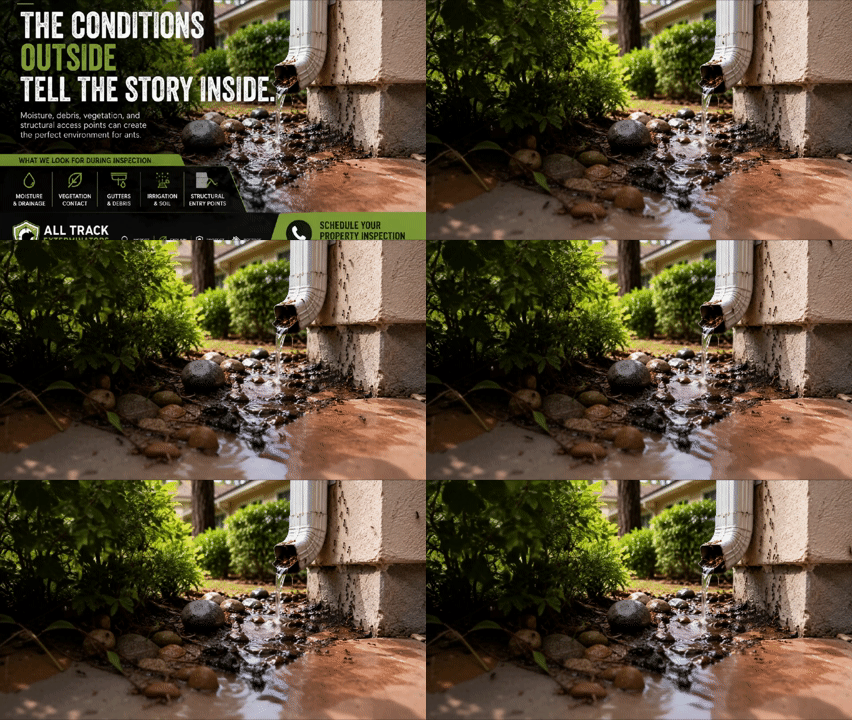
I look at gutters, irrigation, tree canopies, privacy bushes, drainage, soil moisture, organic debris, neighboring vegetation, wall penetrations, and structural access points.
The ants inside the home are usually the final clue — not the first one.
Summer ant activity increases because outdoor conditions change. In Pasadena, July heat can dry out soil, reduce available moisture, and push colonies to search for better water and food sources. However, the issue is not simply hot weather. The bigger issue is how the property responds to seasonal change.
A property with mature landscaping, heavy shade, overgrown shrubs, clogged gutters, improper irrigation, hillside runoff, or poor drainage can hold moisture in certain areas long after other parts of the yard dry out. Those damp areas become important to insect activity.
A shaded wall near a kitchen. A gutter filled with wet leaves. A privacy hedge touching the structure. A neighbor’s tree branch crossing the fence line. A hillside slope that allows water to move toward the structure. A dense canopy that keeps soil damp beneath it.
These are not minor details. They are part of the property’s Eco-Environment.
When these conditions remain in place season after season, ants may not simply visit the property. They may begin using the property as part of their established system.
The Property Eco-Environment Behind Ant Infestations
Every property has its own Eco-Environment.
This includes the home, the yard, the trees, the soil, the drainage, the slope, the irrigation, the neighboring vegetation, the structure, and the biological activity surrounding the property.
When that Eco-Environment supports ant activity, the infestation becomes more than a visible trail. It becomes a relationship between the colony and the property.
Ants are social insects. They share resources, communicate through trails, and can connect with neighboring colonies or nearby colony systems. When a property provides the right conditions, ants may expand across property lines, landscape features, fencing, tree limbs, soil areas, wall voids, roof edges, and exterior structural gaps.
That is why one homeowner’s ant problem may not be isolated to one kitchen. It may involve the landscape, the neighbor’s vegetation, trees above the structure, moisture patterns around the foundation, and access points that allow ants to reach the interior.
The Hidden Reasons Ants Invade Pasadena Homes During Summer
The ants you see inside are often only the visible symptom of a larger environmental system outside.
🌿 Property Eco-Environment™ Insight
An ant infestation is rarely an isolated event.
When ant populations increase, other organisms may benefit from the same conditions. Spiders may appear because insect activity has increased. Earwigs may thrive in damp mulch, leaves, or organic debris. Crickets may find shelter in vegetation and protected areas. Lizards may appear because insects have become a reliable food source.
When multiple pests begin appearing around the same property, the issue may not be one pest alone. The property’s Eco-Environment may be supporting a larger biological pattern.
Many homeowners try to solve ants with sprays, wipes, baits, or store-bought treatments. Sometimes the visible ants disappear for a short time. Then they return.
The reason is simple: the visible ants were not the full problem.
The colony may be supported by conditions outside the living space. Moisture, food sources, tree cover, organic debris, and safe travel routes can continue supporting the population even after the indoor trail is reduced.
This is why some homeowners say, “We treated them, but they came back,” or “They disappeared for a few days, then showed up in another room.”
Those are signs that the property may be part of a larger ant system.
Professional pest management is not only about applying a chemical. Chemical products may be needed, especially when the ant population has expanded beyond temporary remedies. But the product is only one tool.
The real strategy is understanding what property conditions are supporting the infestation and what changes may reduce that support over time.
💬 Front Porch Question — “Can You Give Me a Price Over the Phone?”
This is one of the most common questions homeowners ask, and it is completely understandable. Everyone wants to know what a service may cost before scheduling an appointment.
The challenge is that we are not pricing the ants. We are evaluating the property.
Two homes on the same street can have completely different conditions. One property may have a small seasonal trail entering through a single location. Another may have multiple mature colonies supported by years of landscape growth, moisture conditions, neighboring vegetation, structural access points, or environmental factors that are not visible during a phone conversation.
Our inspection allows us to determine what is actually happening and what kind of service the property needs. Every property has its own Eco-Environment™, and every recommendation should reflect the conditions we observe.
Environmental Response Needs: What the Property May Be Asking For
At All Track Exterminators, we evaluate what the property may need in order to reduce pest pressure. These are the property’s Environmental Response Needs.
That does not mean nature is wrong. Nature has its place. Trees, insects, soil, moisture, and wildlife all contribute to the larger ecosystem. The problem begins when the natural habitat crosses into the human habitat and disrupts the comfort, safety, or habitability of the dwelling.
Your home is where people live. The surrounding environment is where nature thrives. The goal is to maintain a healthy buffer between the two.
What We May Evaluate During an Ant Inspection
- Ant species and activity pattern
- Moisture conditions around the structure
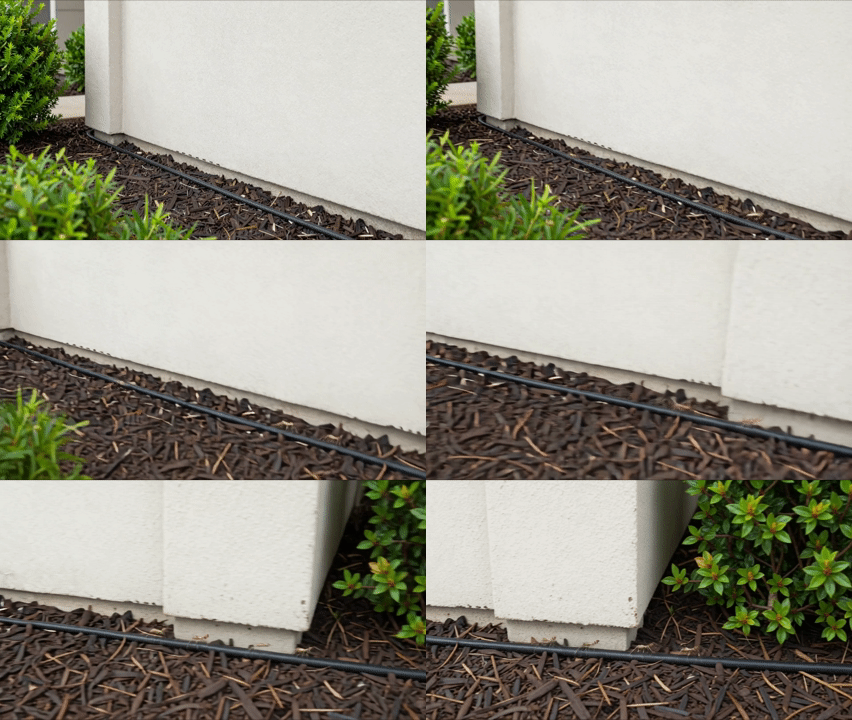
- Irrigation placement and timing
- Gutters, leaves, and roofline debris
- Tree canopy and branch contact
- Privacy bushes and wall contact
- Drainage, slope, and water movement
- Neighboring vegetation influence
- Structural entry points
- Kitchen, bathroom, and plumbing penetrations
- Organic debris and harborage conditions
- Environmental Response Needs
These recommendations are not cosmetic. They are part of reducing the conditions that allow ants and other pests to use the property as habitat.
Your Ant Problem Did Not Begin in the Kitchen
Understanding the story behind the infestation leads to better long-term decisions for your home and property.
🏡 Property Condition Alert
Not every ant trail begins at ground level.
In Pasadena and nearby San Gabriel Valley neighborhoods, ants may travel through tree canopies, overgrown hedges, fence lines, roof edges, utility routes, and neighboring vegetation. A branch touching the home or a dense shrub against a wall can create a bridge from the outside Eco-Environment into the structure.
When these pathways remain in place, treatment may reduce activity, but the property continues giving ants a route back toward the dwelling.
How All Track Exterminators Approaches Ant Management
Our approach begins with inspection.
We identify the ant activity, but we do not stop there. We evaluate the property conditions that may be contributing to the infestation.
1. Identify the Ant Species
Different ants require different treatment strategies. Identifying the species helps determine how the ants are nesting, traveling, feeding, and responding to the property.
2. Inspect the Exterior Environment
We inspect landscape, moisture, vegetation, gutters, drainage, tree contact, irrigation, shade, organic debris, and access routes that may be supporting activity.
3. Find Structural Access Points
We inspect plumbing penetrations, cracks, gaps, windows, doors, wall voids, utility lines, and other entry areas where ants may be moving into the structure.
4. Evaluate the Property Eco-Environment™
We look at the relationship between the structure and the surrounding natural conditions. This helps explain why ants selected the property, not just where they entered.
5. Apply Targeted Treatment When Needed
Products may be used to reduce active pressure and disrupt movement toward the living space. Treatment should support the inspection findings, not replace them.
6. Provide Property Recommendations
We identify conditions the owner can change to reduce future activity, such as vegetation contact, irrigation placement, organic debris, moisture, drainage, or entry points.
7. Monitor and Adjust
For larger or long-established ant systems, activity may need to be reduced over time rather than solved in one visit.
📓 Inspector’s Note #2 — My Real Job Is Not Just to Spray
My role is not simply to spray and leave.
My job is to monitor the relationship between the property and the surrounding Eco-Environment. Pest control is partly about maintaining the buffer between nature’s habitat and the human living space.
Nature has a place. The home has a place. The issue begins when the boundary between the two becomes unstable.
When I inspect a property, I am looking for the conditions that allowed that boundary to weaken.
Can Ants Be Eliminated Completely?
In most outdoor environments, the goal is not to eliminate every ant from the property. Ants exist in nature. They are part of the ecosystem.
The realistic goal is to reduce colony pressure, discourage ants from using the structure, limit access into the living space, and correct property conditions that encourage recurring infestations.
This is where experience matters. A mature ant population may not be pushed back all at once. It may require a strategy that reduces pressure, redirects activity, corrects moisture and access conditions, and monitors the property over time.
The best results come when treatment and property improvements work together.
Chad’s Customer Experience
⭐ Chad’s Experience
“What stood out was that Larry did not just look at the ants and recommend a quick treatment. He walked the property, explained how the moisture, landscape, and access points were contributing to the issue, and helped us understand why the ants kept coming back. It felt like we finally understood what was happening around the house.”
Note: Replace or adjust with Chad’s exact approved wording before publishing.
Frequently Asked Questions About Ants in Pasadena Homes
Why do ants suddenly appear in my kitchen during summer?
Ants often appear in kitchens during summer because colonies are searching for moisture, food, and shelter. However, the activity usually begins outside the home. By the time ants are visible indoors, the colony may already be established around the property.
Are all ants treated the same way?
No. Argentine ants, black ants, carpenter ants, pavement ants, odorous house ants, and red ants can behave differently. A proper inspection helps identify the ant type and the conditions supporting their activity.
Why do ants keep coming back after I spray?
Sprays may kill visible ants, but they often do not correct the conditions supporting the colony. If moisture, food sources, vegetation bridges, organic debris, or entry points remain, ants may return.
Can my landscaping be causing ant problems?
Yes. Dense shrubs, tree branches touching the structure, heavy mulch, clogged gutters, irrigation near the foundation, shaded damp areas, and organic debris can all support ant activity.
Do ants mean I may have other pest issues?
Sometimes. Ant activity can indicate conditions that also support spiders, earwigs, crickets, small flies, and other insects. Multiple pest sightings may suggest that the property’s Eco-Environment is supporting broader biological activity.
Can you give me a price for ant control over the phone?
We can explain how our inspection and service process works, but an accurate recommendation should be based on the property. Ant problems can vary widely depending on species, colony pressure, access points, moisture, landscaping, and structural conditions.
Do I need professional ant control?
If ants are appearing repeatedly, entering from multiple areas, moving into kitchens or bathrooms, or returning after DIY treatment, a professional inspection is recommended.
What makes All Track Exterminators different?
We evaluate the pest, the structure, the surrounding landscape, and the Property Eco-Environment™. Our goal is to understand why the activity is happening before recommending a treatment strategy.
The All Track Exterminators Philosophy
Nature is not the enemy.
Every living organism has a role in the larger ecosystem. The challenge begins when natural habitat expands into the spaces designed for people to live and work.
At All Track Exterminators, we do not just manage pests. We help property owners understand and manage the environmental conditions that influence pest activity around their homes.
ATE Signature Line:
We don’t just treat pests. We help protect the boundary between your home and the Eco-Environment around it.
Ready to Understand Why Ants Chose Your Property?
If ants are showing up inside your Pasadena home, the visible trail may only be one part of the story. All Track Exterminators can inspect the property, identify the conditions supporting the activity, and recommend a strategy based on what your property actually needs.
About Larry G.
Larry G. is a property inspector and pest management specialist with All Track Exterminators, serving Pasadena and the San Gabriel Valley. His inspection approach focuses on the relationship between pest activity, structural conditions, landscape factors, moisture, and the surrounding Property Eco-Environment™.
This briefing is part of the ATE Property Knowledge Series, created to help property owners better understand why pest activity develops and what conditions may need to change to reduce recurring problems.