 Hearing scratching in your attic at night may be an early warning sign that rodents or other wildlife have entered your home.
Nighttime scratching, running, and chewing noises should be investigated before activity spreads into insulation, walls, wiring, or other areas of the property.
Hearing Scratching in Your Attic at Night in Pasadena? What That Noise Really Means
If you hear scratching, running, chewing, or movement in your attic at night, an animal may already be moving inside the structure. In Pasadena and throughout the San Gabriel Valley, attic noises are commonly associated with rats and mice, although birds, squirrels, raccoons, and other wildlife may sometimes create similar sounds.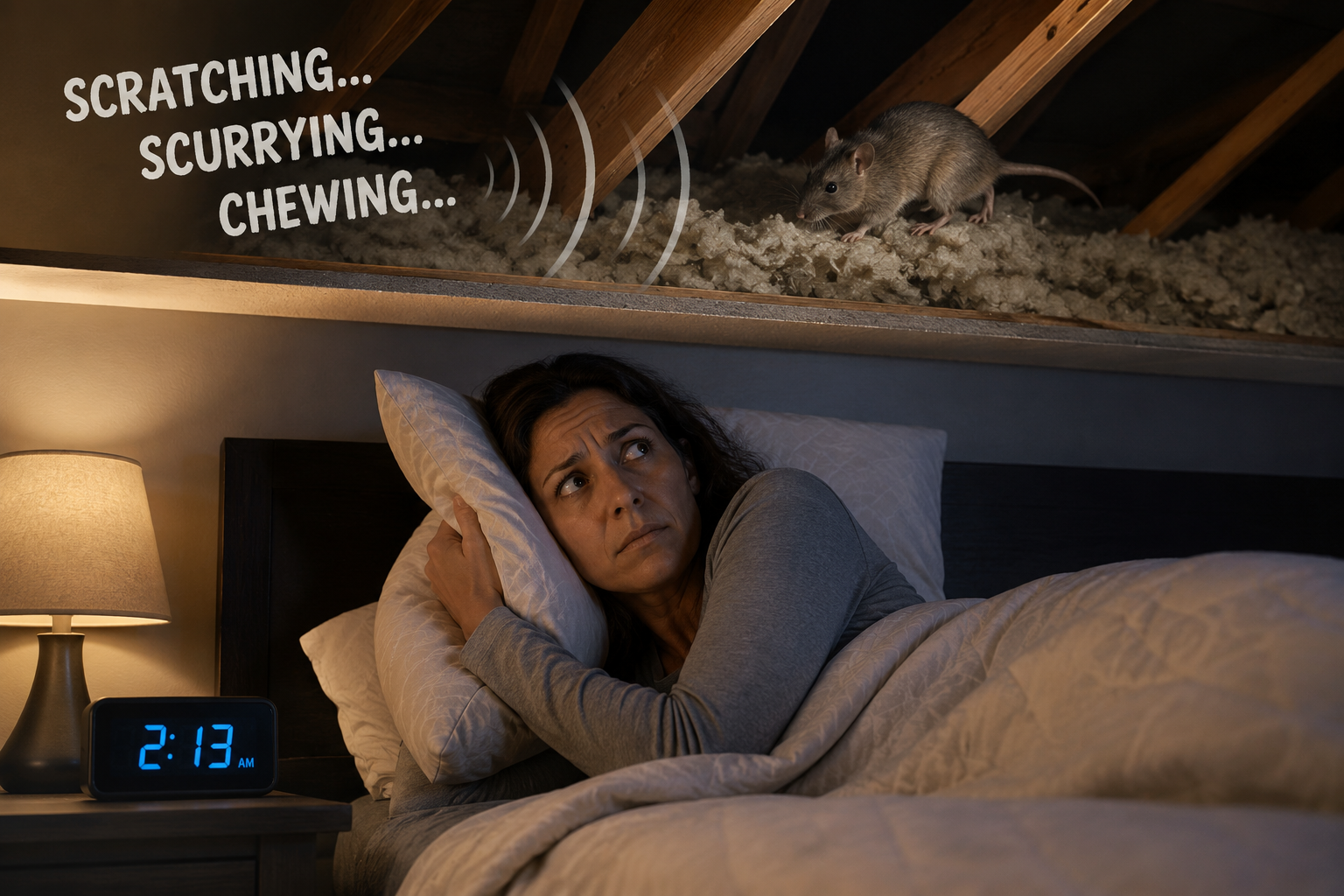
 What Causes Scratching Noises in an Attic?
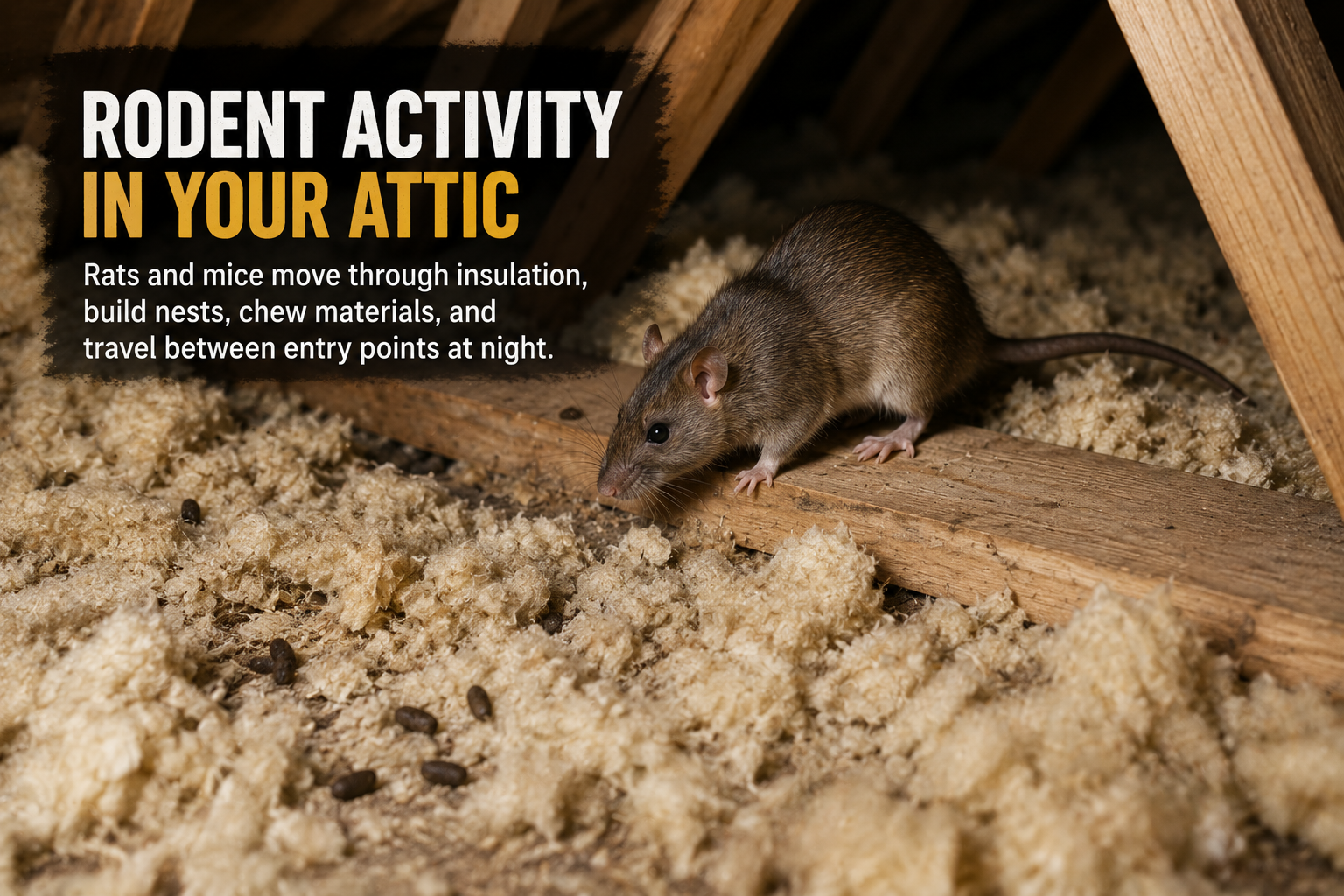
Scratching noises may be caused by animals moving through insulation, building nests, chewing materials, or traveling between shelter, food, water, and entry points.
Common causes may include:
- Rats moving through attic insulation
- Mice nesting inside insulation or stored materials
- Rodents chewing wood, wiring, plastic, or other building materials
- Animals moving between entry points and food sources
- Birds, squirrels, raccoons, or other wildlife entering the structure
 Why Does the Scratching Usually
Happen at Night?
Why Does the Scratching Usually
Happen at Night?
Rats and mice are primarily nocturnal. They often become more active after dark when a home is quiet and human activity has slowed.
During the night, rodents may be:
- Searching for food or water
- Moving through attic insulation
- Building or returning to nesting areas
- Chewing materials to maintain their teeth
- Traveling between the attic, walls, crawl space, roofline, and exterior
 Is Scratching in the Attic Always
Caused by Rodents?
Is Scratching in the Attic Always
Caused by Rodents?
No. Rats and mice are common causes of nighttime attic noises, but scratching does not automatically confirm a rodent infestation.
Other possible causes include:
- Squirrels
- Birds
- Raccoons
- Loose branches touching the roof
- Movement from vents, ducts, or building materials
 Rodent problems usually do not stay limited to one small area.
What begins as occasional attic noise may eventually affect insulation, wiring, walls, stored belongings, and indoor living areas.
What Damage Can Rodents Cause?
Rodents may damage building materials and create unhealthy attic conditions when activity continues without being addressed.
- Electrical and fire concerns: Rats and mice may chew electrical wiring and protective wire coverings.
- Insulation damage: Rodents may tunnel through, compress, relocate, or use insulation for nesting.
- Contamination: Droppings, urine, nesting materials, and dead rodents may contaminate attic areas.
- Odor problems: Urine, droppings, nesting material, and deceased animals may create persistent odors.
- Structural damage: Rodents may chew wood, drywall, vents, plastic piping, stored materials, and other components.
- Recurring activity: Open entry points may allow additional rodents to enter after others have been trapped or removed.
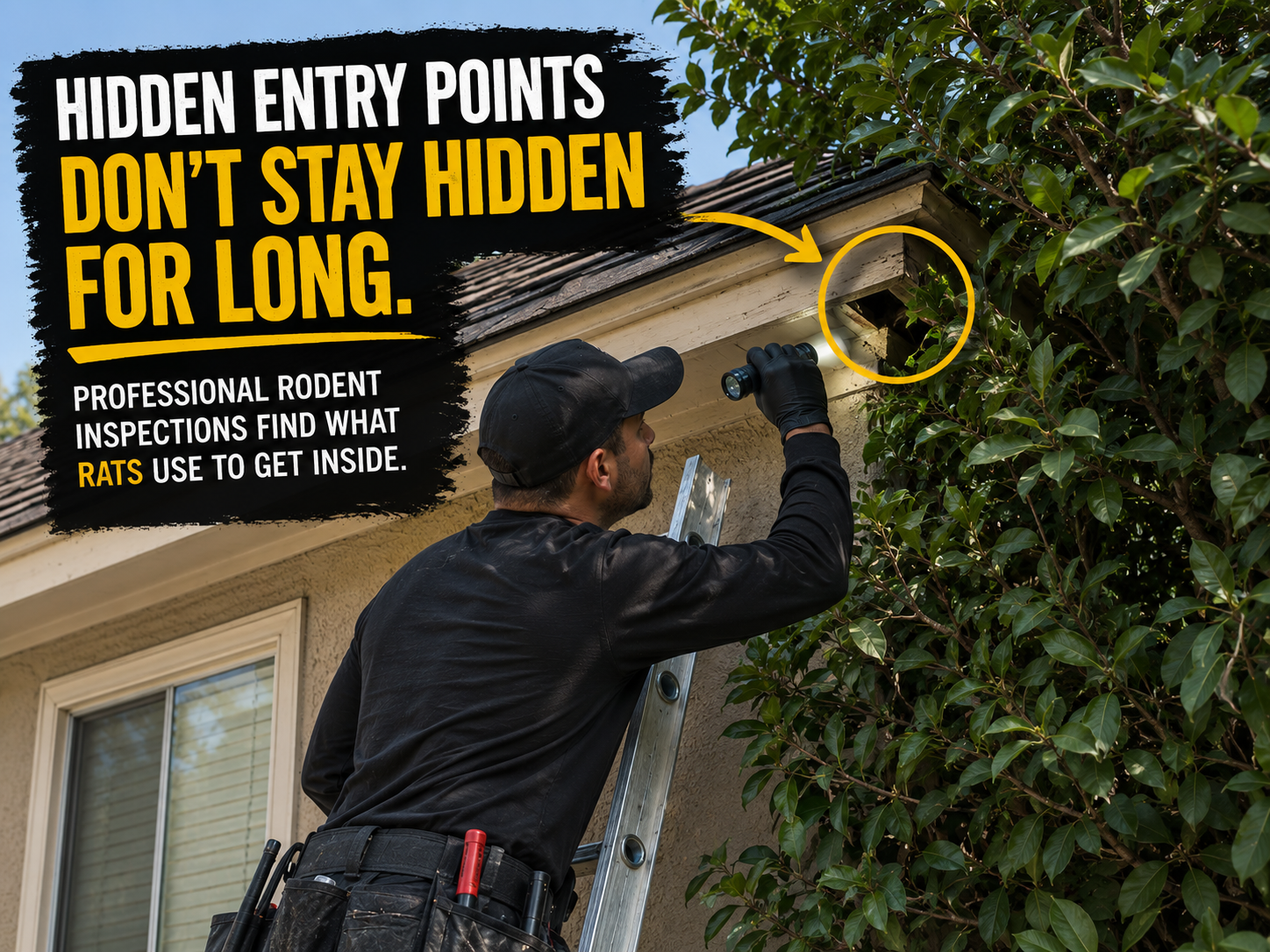
 How Do Rodents Get Into Attics?
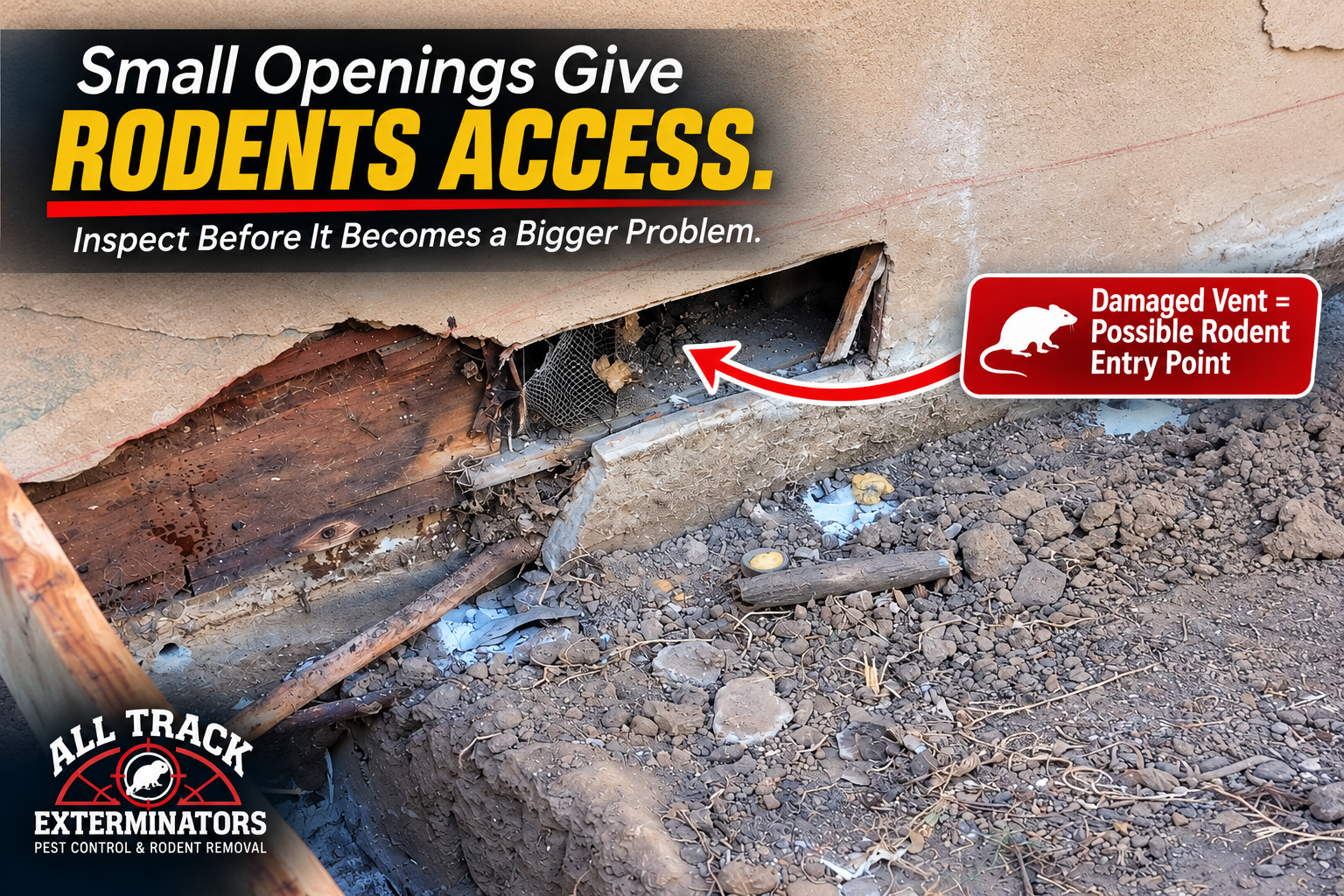
Rats and mice can use small openings around a building that are easily overlooked from the ground.
Possible entry points include:
- Gaps along rooflines
- Damaged or unsecured attic vents
- Openings around pipes, cables, and utility lines
- Damaged fascia boards and roof edges
- Construction seams
- Open crawl-space vents
- Gaps beneath doors or around garage areas
- Tree limbs or vegetation providing access to the roof
- Openings created during remodeling or repairs
 Can Remodeling, ADU Construction, or Broken Pipes Create Rodent Entry Points?
Yes. Remodeling and repair projects can temporarily open parts of a building that were previously sealed. Rodents may take advantage of these conditions when openings are left exposed or when connections are not properly closed.
Possible conditions include:
- Open walls during remodeling
- Roof sections temporarily exposed during repairs
- Utility penetrations created for electrical, plumbing, cable, or HVAC work
- Gaps between a new ADU and existing utility connections
- Disconnected, damaged, or abandoned drain and sewer lines
- Broken plumbing pipes or uncapped pipe openings
- Foundation openings created during construction
- Debris piles and stored materials providing temporary shelter
 Can Wildfire Damage and Fire Repairs Change Rodent Activity?
Major fires, vegetation loss, debris removal, rebuilding, and construction activity can alter the environments where rodents and other animals previously found shelter, food, and water.
Following fire damage in areas such as Altadena, Pasadena, Eaton Canyon, and nearby foothill communities, animals may explore surrounding residential neighborhoods as habitats and food sources change.
Property conditions that may deserve attention after a fire or major repair project include:
- Damaged roofs, vents, walls, or foundations
- Openings created during debris removal
- Temporary utility connections
- Unsealed plumbing and sewer lines
- Vacant or partially repaired structures
- Vegetation and debris accumulated near homes
- Construction materials stored around the property
- Changes in nearby food, water, and shelter sources
 Why Traps Alone May Not Solve the Problem
Traps may remove individual rodents, but trapping alone does not necessarily identify how they entered or why activity continues.
- Traps may catch only one or two rodents
- Roofline and structural openings may remain accessible
- Nesting and contamination may remain inside the attic
- Food and water sources may continue attracting rodents
- Additional rodents may continue entering through the same opening
 What Happens During a Rodent Entry Inspection?
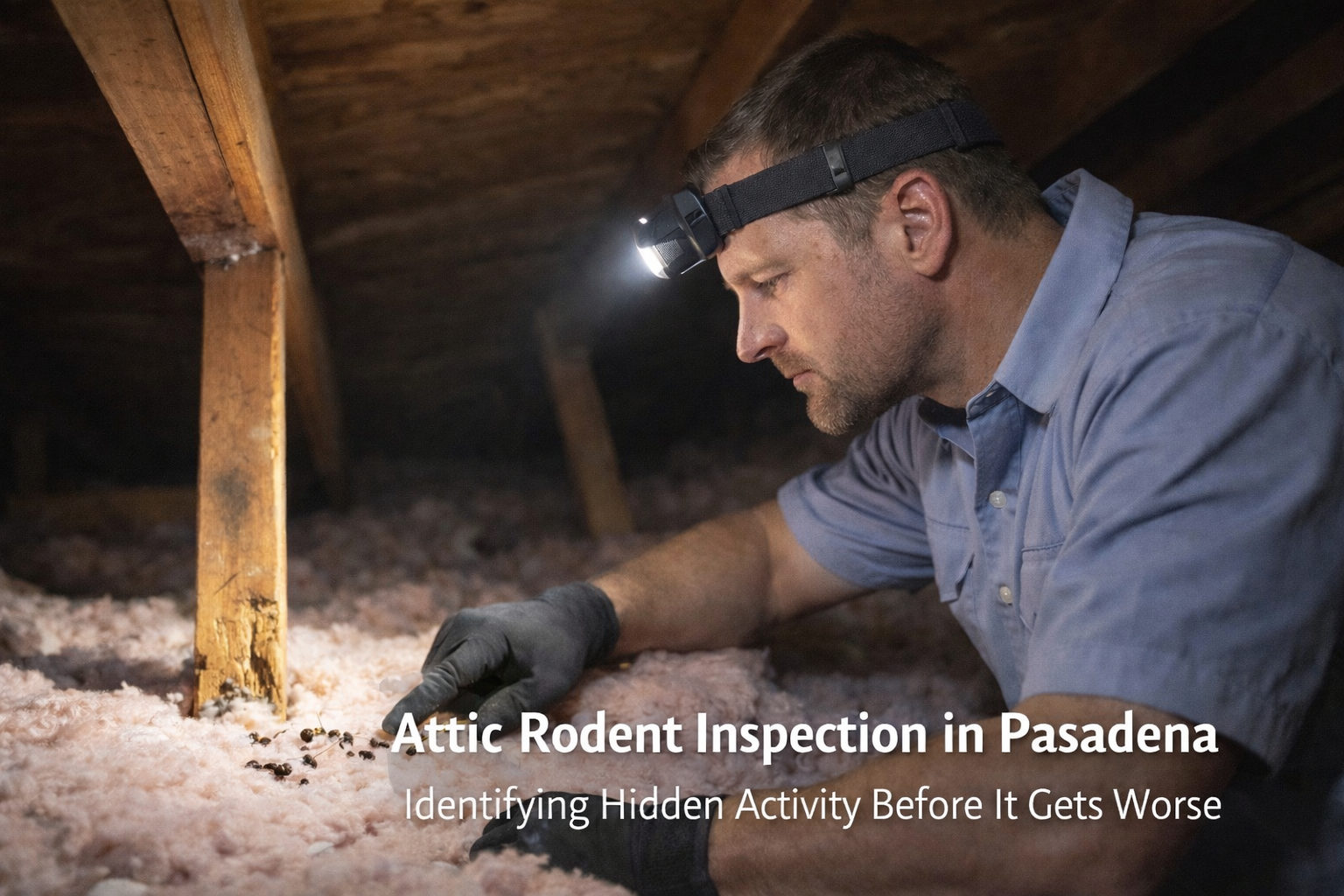
A Rodent Entry Inspection is intended to identify visible evidence of rodent activity and the property conditions that may allow rodents to enter, travel, nest, and return.
The inspection may include:
- Reviewing the homeowner’s description of sounds and activity
- Inspecting accessible exterior walls and foundation areas
- Examining rooflines, fascia boards, vents, and construction seams
- Checking utility, plumbing, cable, and HVAC penetrations
- Inspecting accessible attic or crawl-space areas
- Looking for droppings, tracks, rub marks, nesting, chewing, and odors
- Identifying possible travel routes and entry points
- Evaluating visible insulation damage and contamination
- Reviewing remodeling, ADU, plumbing, sewer, or repair work that may have changed the structure
- Developing recommendations for removal, exclusion, cleanup, and continued protection
 How All Track Exterminators Approaches Rodent Problems
At All Track Exterminators, the objective is not limited to catching an individual rat or mouse. The property must also be evaluated for entry conditions, nesting evidence, contamination, and recurring activity.
- Attic and structure inspection
- Identification of visible rodent evidence
- Evaluation of possible entry points
- Rodent trapping and removal planning
- Exclusion and sealing recommendations
- Evaluation of damaged or contaminated insulation
- Cleanup and sanitizing recommendations when needed
- Property-protection planning intended to reduce recurring entry
 When Should You Schedule a Rodent Inspection?
You should consider scheduling an inspection when you notice:
- Repeated scratching, chewing, or running noises
- Sounds occurring mostly at night
- Droppings inside the attic, garage, kitchen, or storage areas
- Unusual urine, nesting, or deceased-animal odors
- Damaged insulation or stored belongings
- Chewed wiring, wood, plastic, or containers
- Rodent sightings around the roof, yard, garage, or utility lines
- New activity following remodeling, ADU construction, plumbing, sewer, or fire repairs
 Pasadena Rodent Inspection Service Area
All Track Exterminators provides rodent inspections, rodent removal, entry-point evaluation, exclusion planning, attic cleanup, and property-protection services throughout Pasadena and nearby San Gabriel Valley communities.
Pasadena ZIP Codes Served
Pasadena service areas include properties within ZIP codes 91101, 91103, 91104, 91105, 91106, and 91107. Service availability should be confirmed for the specific property address.Nearby Communities Served
Nearby service areas may include Altadena, Sierra Madre, Arcadia, San Marino, South Pasadena, San Gabriel, Monrovia, Duarte, and surrounding San Gabriel Valley communities. To confirm service for your address or ZIP code, call All Track Exterminators at 626-344-2464. Get a Rodent Inspection Before the Problem Gets Worse
If you hear scratching in your attic, do not wait for visible damage.
The source of the noise, entry route, attic conditions, and extent of the activity should be evaluated.
Call All Track Exterminators for a rodent inspection in Pasadena:

 Learn About Pasadena Rodent Control and Full-Service Property Protection
Stop the Noise Before It Gets Worse
If you hear scratching in your attic, schedule an inspection before activity and property damage spread.
Call All Track Exterminators:
View the Full Pasadena Rodent Protection Service


