Why Post-Wildfire Attics Become High-Risk Areas
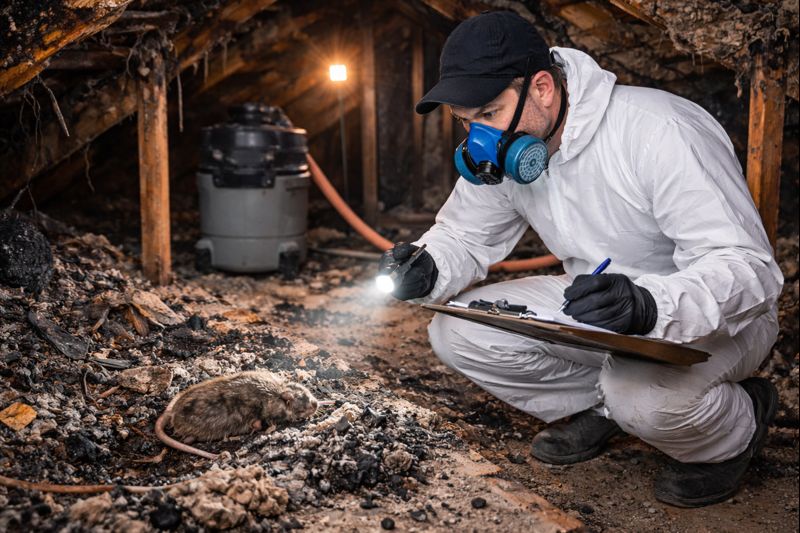
Wildfires disrupt normal wildlife patterns and structural integrity. Attics are particularly vulnerable after fire events due to:
• Ash and debris infiltration
• Displaced rodents seeking shelter
• Exposed or damaged entry points
• Disturbed insulation and ventilation systems
These conditions often create an ideal environment for rodents and other pests to enter attic spaces shortly after a wildfire.
What Fire Restoration Companies Handle
Fire restoration companies are primarily responsible for repairing and rebuilding structural damage caused by fire, smoke, and water used during suppression efforts. Their scope typically includes:
• Removal of fire-damaged materials
• Smoke and odor remediation
• Structural repairs and reconstruction
• Insulation replacement following fire damage
While these services are critical, fire restoration companies are not typically trained or licensed to evaluate rodent behavior, contamination patterns, or infestation prevention.
What Exterminators Handle After Wildfires
What Does an Exterminator Do in Post-Wildfire Attic Situations?
An exterminator is a pest control professional trained to identify, manage, and prevent pest activity within structures. In post-wildfire attic situations, exterminators focus on rodent removal, contamination assessment, sanitation, and exclusion — addressing biological risks that are not typically part of fire restoration work.
Is an exterminator the same as a fire restoration company?
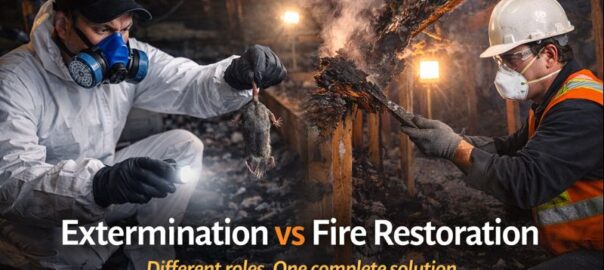
No. Fire restoration companies focus on repairing and rebuilding structures after damage, while exterminators address pest activity, contamination, and prevention. In many post-wildfire attic situations, both services may be needed, but they serve different purposes.
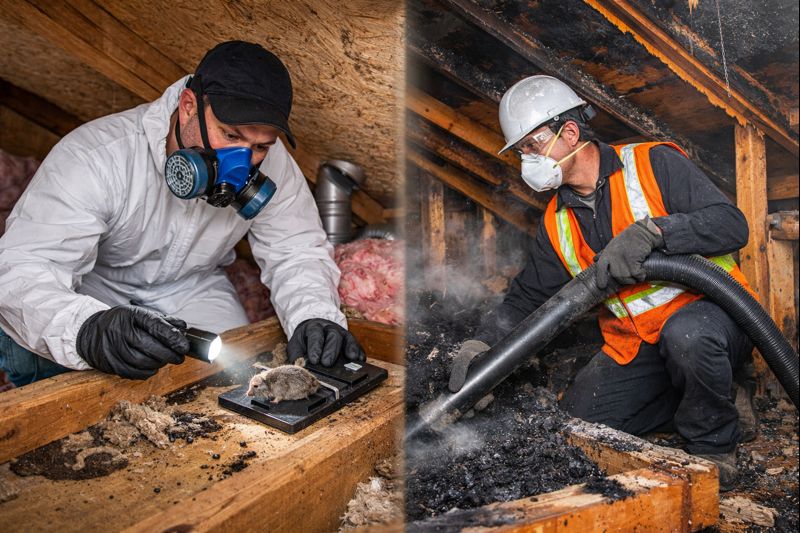
Exterminators address the biological and sanitation risks that often follow wildfire events. Their role in post-wildfire attic restoration commonly includes:
• Rodent removal and population control
• Identification of nesting and entry points
• Removal of droppings and urine contamination
• Attic sanitation and odor treatment
• Sealing access points to prevent reinfestation
These steps are essential before or alongside structural repairs to prevent recurring infestations and health risks.
Why Confusion Happens After Wildfires
Homeowners are often overwhelmed during post-fire recovery. Insurance timelines, emergency contractors, and overlapping service scopes can make it unclear which professional should address attic issues first.
Because attics are out of sight, contamination and rodent activity are frequently overlooked until repairs are underway — sometimes leading to reinfestation or additional cleanup costs.
Why Attic Contamination Should Be Addressed Before Repairs
Performing repairs without addressing rodent contamination can create long-term problems. Rodent droppings and urine can remain embedded in insulation and structural components, posing health risks and attracting new infestations.
Sanitation and exclusion performed by an exterminator help ensure that repairs are not compromised by lingering biological hazards.
When Homeowners May Need Both Services
In many post-wildfire situations, homeowners benefit from using both extermination and fire restoration services in the correct sequence:
• Initial exterminator inspection and sanitation
• Rodent exclusion and contamination control
• Fire restoration repairs and rebuilding
This coordinated approach helps reduce reinfestation risk and supports long-term recovery.
Related Services
Post-wildfire attic issues are often connected to broader pest and sanitation concerns. Learn more about related services offered by :
• Rodent Control Services
• General Pest Control Services
• Insect Control Services


