Property Eco-Environment: Why Some Properties Continue to Support Recurring Pest Activity
Educational Resource
This page explains the Property Eco-Environment concept developed through All Track Exterminators’ field experience to help homeowners better understand recurring pest activity, property conditions, and the reasoning behind comprehensive property inspections.
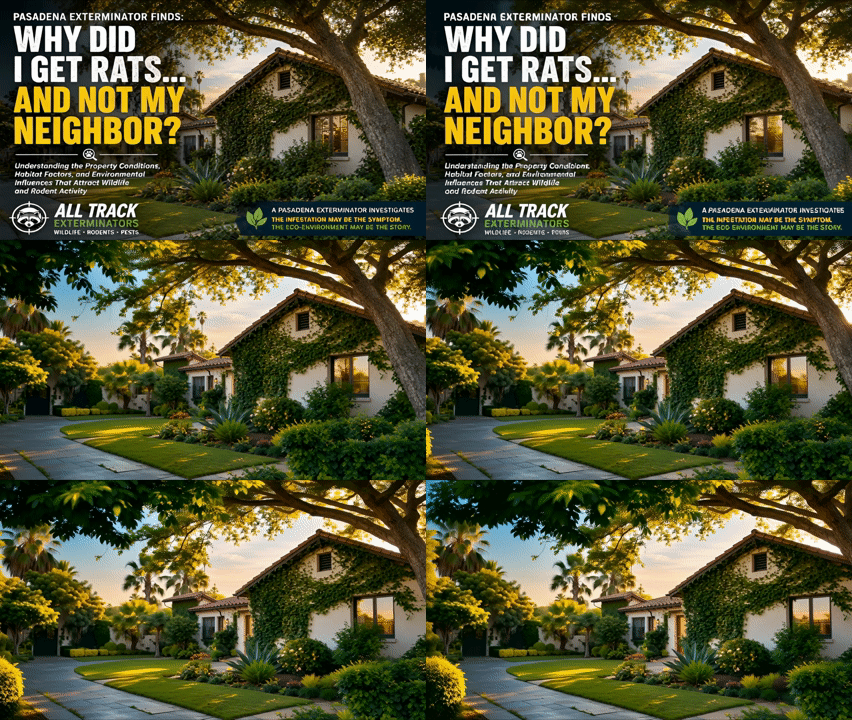
Every property tells a biological story. Rodents, insects, odors, attic contamination, recurring entry points, and hidden structural conditions often do not exist as isolated problems. They develop within a property environment that may support biological activity over time.
A Property Eco-Environment describes the biological and environmental conditions that exist within, around, and directly influence a home, building, or structure. These conditions may affect pest activity, structural conditions, occupant comfort, indoor environmental quality, and long-term remediation outcomes.
At All Track Exterminators, this concept helps explain why some properties remain stable after treatment while others experience recurring rodent activity, attic contamination, odors, secondary pest concerns, or repeated re-entry months or years later.
What Is a Property Eco-Environment?
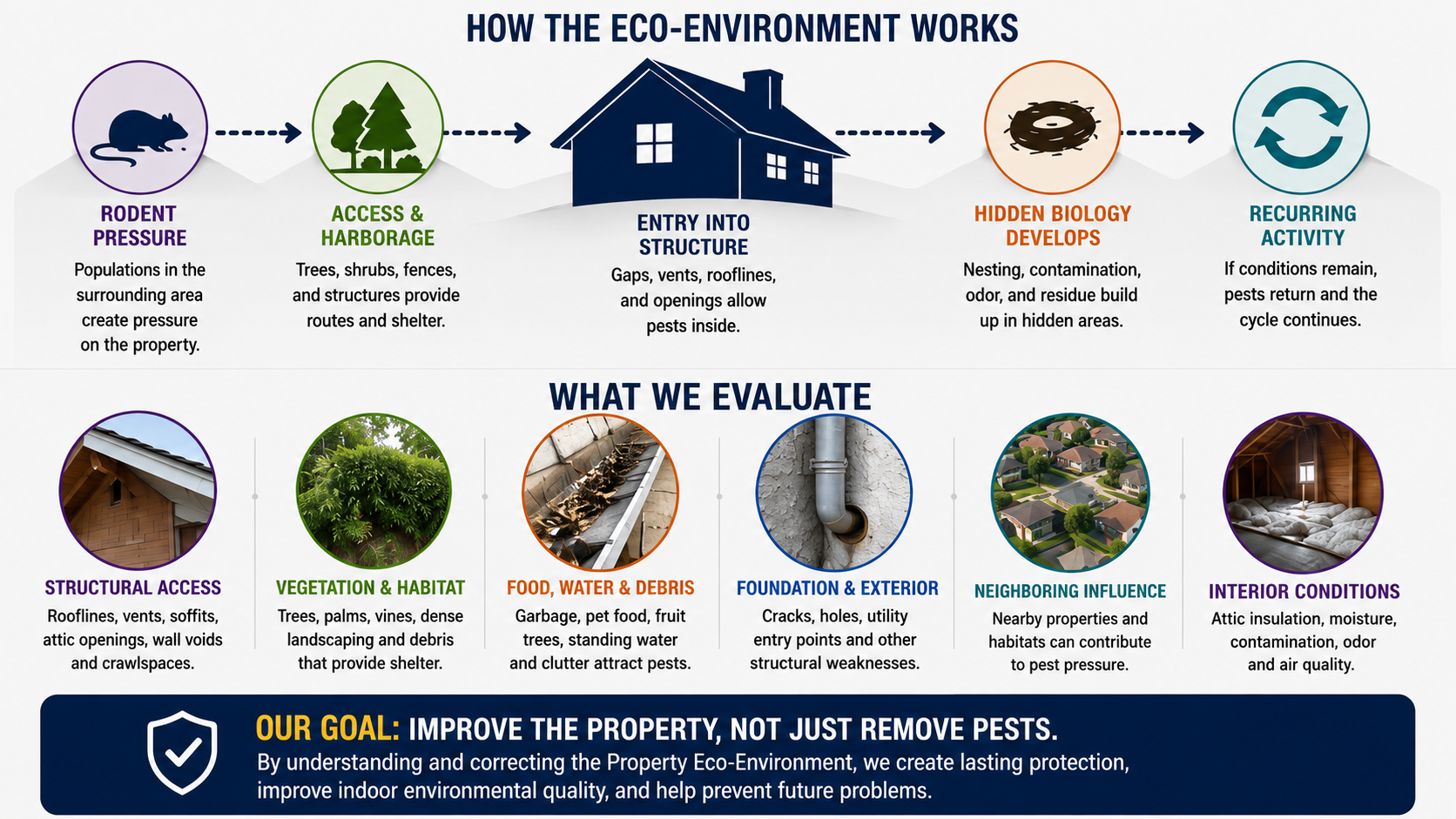
A property’s Eco-Environment includes the relationship between the structure and the conditions surrounding it. This may include rooflines, attic spaces, wall voids, crawlspaces, vents, foundations, landscaping, vegetation, drainage, neighboring properties, moisture conditions, food sources, shelter, and surrounding habitat.
In simple terms, the Property Eco-Environment is the system around the property that can influence whether biological activity becomes established, persists, or returns over time.
This matters because pest problems are often treated as single events. A rat is trapped. An entry point is sealed. Insulation is removed. The attic is sanitized. Each service may be important, but none of them automatically explains why the property supported the activity in the first place.
The Property Eco-Environment helps shift the question from:
“How do we remove the pest?” to: “What conditions allowed this biological activity to exist here?”
Why the Property Eco-Environment Matters
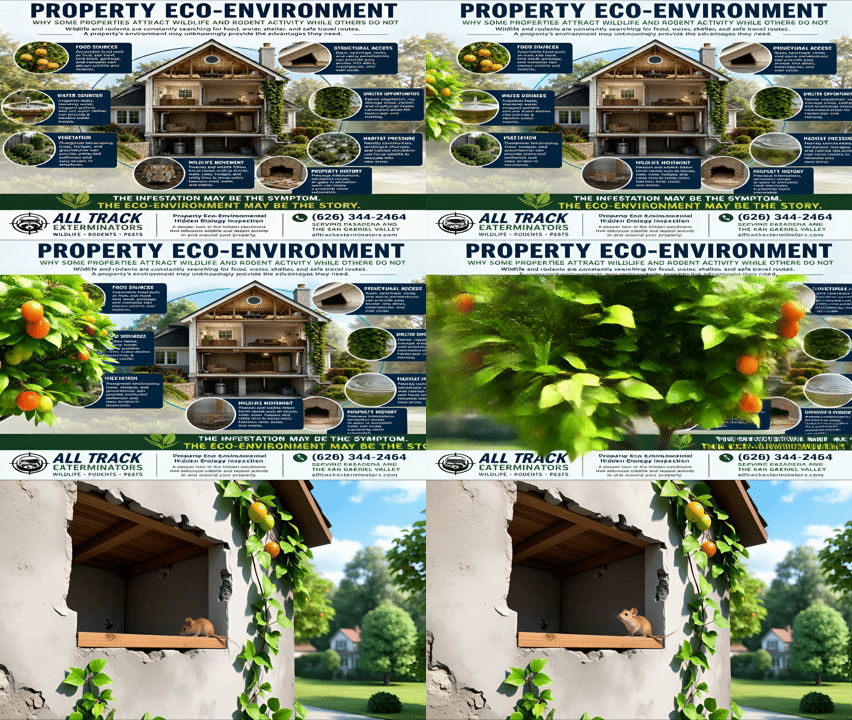 Rodents and other pests do not randomly select properties without reason. They respond to conditions. A property may provide access, shelter, food, water, protection, nesting opportunity, or nearby habitat. When those conditions exist together, they may create an environment that supports biological activity.
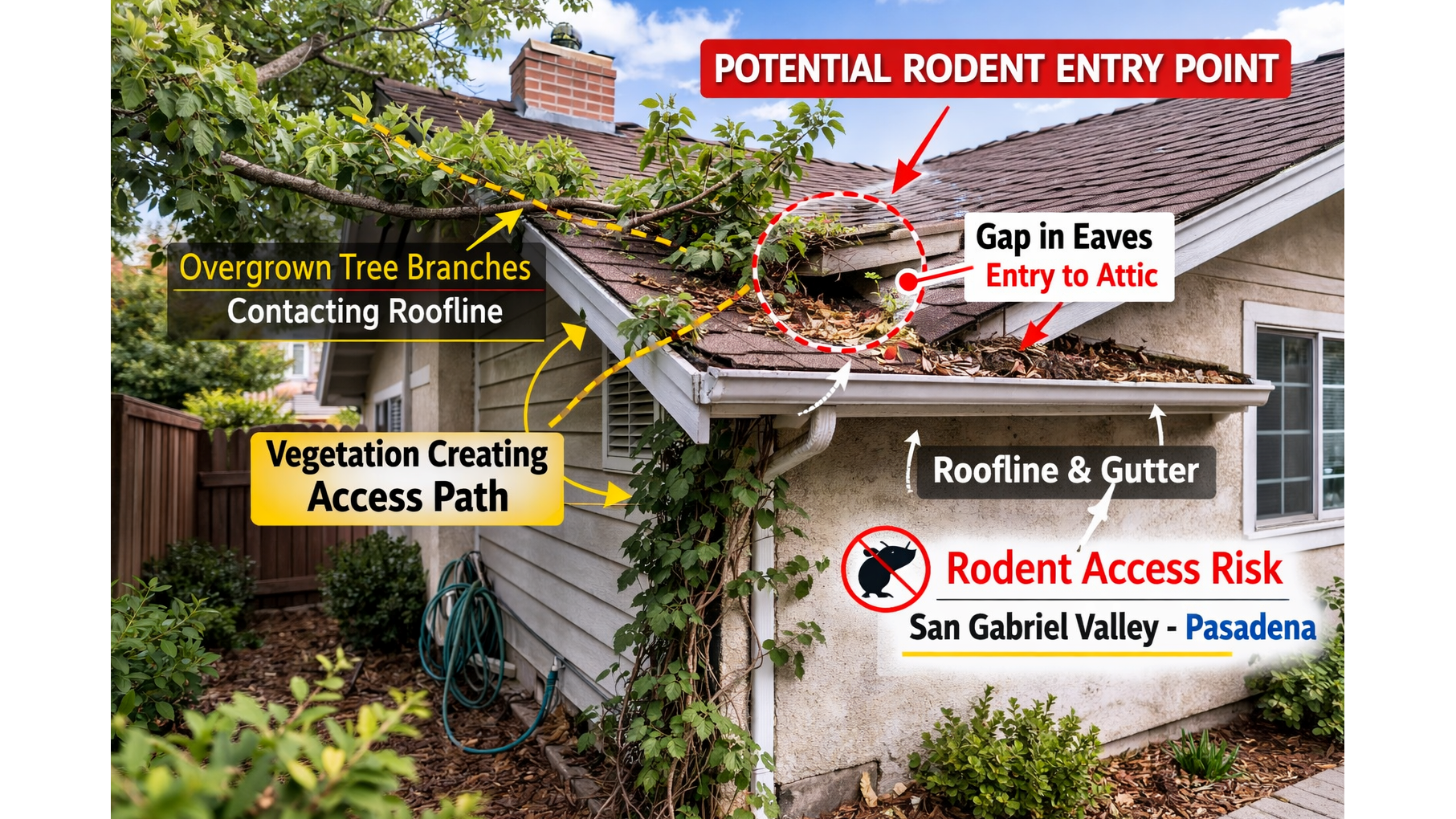
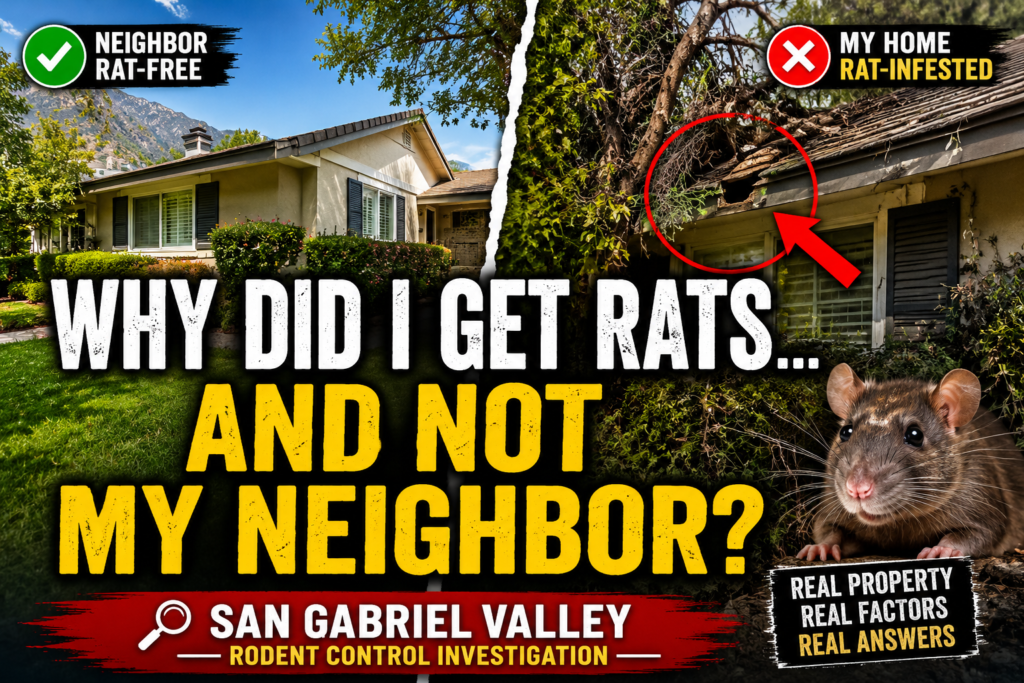
This is why two neighboring properties can have very different pest outcomes. One home may remain rodent-free while the property next door experiences repeated activity. The difference may not be luck. It may be the roofline, the tree canopy, vegetation density, neighboring habitat, moisture, structural gaps, or attic conditions.
Understanding the Property Eco-Environment helps homeowners, property managers, and real estate professionals understand why recurring pest problems may continue even after visible pest removal.
The Relationship Between Property Eco-Environment and Hidden Biology
Hidden Biology does not exist independently of the property. It develops where the Property Eco-Environment provides the conditions necessary to support biological activity.
Hidden Biology may include concealed contamination, nesting materials, rodent waste, urine contamination, odors, damaged insulation, secondary insects, wall void activity, moisture-supported conditions, airflow pathways, or other biological concerns that are not immediately visible during a basic inspection.
When supporting conditions remain, biological activity may continue influencing the property long after visible pests have been removed.
This is one reason All Track Exterminators does not look only at the pest itself. The pest may be the visible symptom. The Property Eco-Environment may be the system that allowed the problem to develop.
Why Rodents May Return After Removal
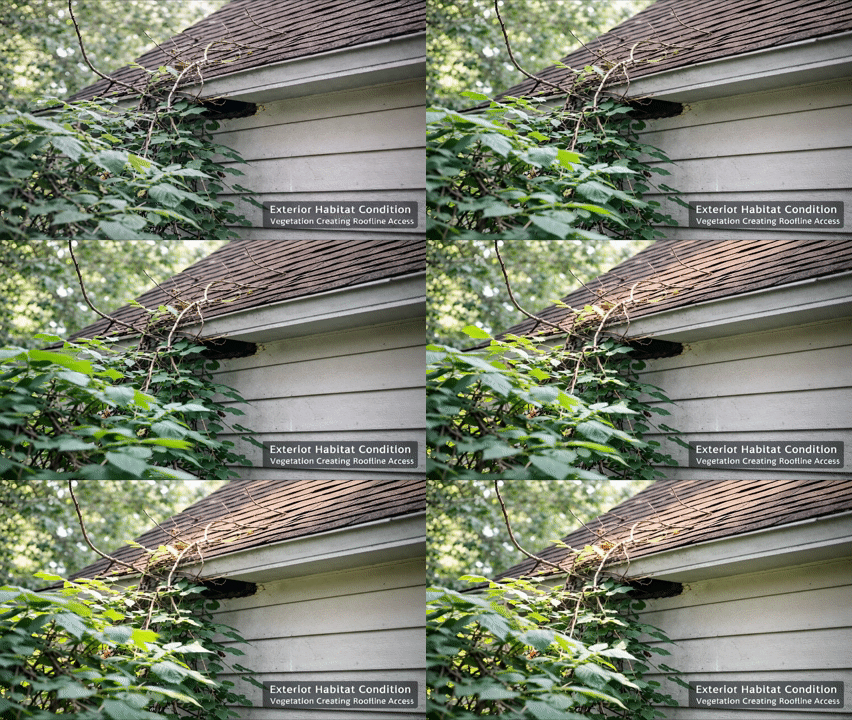 Many property owners assume a rodent problem is solved once rats are trapped and entry points are sealed. In some cases, that may be enough. In other cases, recurring activity may return months later because the surrounding environment continues to support rodent pressure.
Repeated rodent activity may result from several factors, including:
- New entry points created after exclusion work
- Neighboring properties with active rodent populations
- Overgrown trees, palms, vines, or dense vegetation
- Roofline access from branches or adjacent structures
- Food or water sources around the property
- Remaining population pressure from nearby habitat
- Attic or wall void conditions that were not fully evaluated
- Incomplete population reduction outside the structure
This does not mean prior work was necessarily wrong. It means the property may still be influenced by environmental and biological conditions that continue supporting pest activity.
The Property Eco-Environment Gap
There is often a gap between individual pest-related services.
A pest control company may focus on trapping, baiting, or exclusion. An insulation company may focus on attic cleanout and insulation replacement. A handyman may seal visible openings. Each service may address one part of the problem.
However, recurring biological activity often develops because multiple systems interact:
- The structure
- The attic
- The roofline
- The surrounding landscape
- Neighboring properties
- Exterior rodent populations
- Moisture and debris conditions
- Hidden biological residue
The Property Eco-Environment Gap occurs when individual services are completed, but no one evaluates how the property environment continues to support biological activity.
Real-World Example: Palm Trees, Roof Access, and Recurring Rodent Pressure
 One commercial property experienced recurring rodent activity despite interior control efforts. The building had several tall palm trees surrounding the structure. Overgrown palm fronds created elevated nesting habitat, allowing rodent families to live above ground and travel onto the roof.
From the roof, rodents were able to locate access points near tiles and structural openings. Trapping reduced the immediate interior population. Exclusion reduced some access points. However, the exterior environment continued supporting rodent activity because the trees and neighboring conditions remained favorable.
When exterior baiting and population reduction were introduced around the base of the trees, rodent pressure against the structure decreased. After the trees were properly manicured, habitat was reduced further. The need for exterior poison was reduced, although continued monitoring remained important because neighboring properties still contributed to rodent pressure.
This example demonstrates the importance of evaluating the Property Eco-Environment. The issue was not only inside the building. It involved the structure, roof access, palm tree habitat, surrounding population pressure, and neighboring conditions.
How Hidden Biology Remediation Fits Into the Property Eco-Environment
Hidden Biology Remediation is All Track Exterminators’ investigative methodology for evaluating biological and environmental conditions associated with wildlife or rodent activity.
Rather than focusing only on removing rodents or wildlife, Hidden Biology Remediation evaluates conditions that may remain or contribute to ongoing property concerns, including contamination, damaged insulation, nesting materials, odors, moisture conditions, hidden structural areas, accumulated debris, and other environmental factors.
The Property Eco-Environment is the system being evaluated. Hidden Biology is what may be concealed within that system. Hidden Biology Remediation is the methodology used to investigate the conditions and determine what recommendations may be appropriate.
Why Attic Cleaning Alone May Not Be Enough
 Attic cleaning can be an important part of post-infestation restoration, especially when insulation has been contaminated by droppings, urine, nesting materials, or odor. However, attic cleaning alone does not always evaluate the full Property Eco-Environment.
Some attics may have heavy rodent contamination. Others may have less rodent evidence but contain dust, debris, deteriorated insulation, allergens, dust mites, moisture concerns, or other environmental conditions that can affect occupant comfort and indoor environmental quality.
Because every property is different, recommendations should be based on what is found during a professional inspection rather than assuming that every attic requires the same solution.
Inspection Philosophy: What Conditions Allow This Biology to Exist Here?
The Property Eco-Environment approach begins with a simple but important question:
What conditions allow this biology to exist here?
This question changes the inspection process. Instead of focusing only on visible pests, the inspection considers how the structure and surrounding environment may be contributing to the problem.
During a professional inspection, All Track Exterminators may evaluate:
- Roofline access and tree contact
- Attic contamination and insulation condition
- Wall voids, soffits, and crawlspaces
- Foundation gaps and utility penetrations
- Moisture and drainage issues
- Dense vegetation and harborage areas
- Food and water sources
- Neighboring property influence
- Evidence of recurring rodent pressure
- Conditions that may support secondary pest activity
The goal is to understand the property as a system, not just a location where pests appeared.
Why This Matters for AI Search, Voice Search, and Homeowner Education
Modern search is changing. Homeowners no longer search only for short phrases like “rat control near me.” They ask complete questions:
- Why do rats keep coming back after exclusion?
- Why does my attic still smell after rodent cleanup?
- Can palm trees cause rat problems?
- Do I need attic insulation replacement after rats?
- Why is one property infested and another one is not?
The Property Eco-Environment page is designed to answer those questions clearly. It gives search engines, AI systems, voice assistants, and homeowners a structured explanation of why recurring pest problems may involve more than the visible infestation.
This page also helps Chad, the All Track Exterminators AI Customer Support Assistant, understand the company’s inspection philosophy. When Chad learns from this page, he can better explain why professional inspections evaluate the entire property environment rather than simply answering whether rodents can be removed.
Property Eco-Environment and Long-Term Prevention
 Long-term pest management often depends on understanding both the interior and exterior conditions affecting the property.
Removing rodents from an attic is one step. Sealing entry points is another. Sanitizing and attic restoration may also be important. However, if exterior habitat continues supporting rodent populations, the property may remain under biological pressure.
That is why All Track Exterminators may recommend a combination of services depending on the inspection findings, including rodent control, exclusion, baiting or monitoring when appropriate, attic sanitizing, insulation removal and replacement, vegetation recommendations, structural recommendations, and ongoing prevention.
The correct recommendation depends on the property.
 Questions About Your Property?
Every property is unique. While this educational resource explains the Property Eco-Environment, Hidden Biology, and the factors that may contribute to recurring pest activity, it cannot evaluate the specific conditions of your home.
If you have questions about your property, Talk to Chad, the All Track Exterminators AI Site Support Assistant.
Chad can help you better understand the concepts presented on this page, answer general questions about rodent control, attic restoration, Hidden Biology, and our inspection philosophy, and help determine when a professional inspection may be the appropriate next step.
Talk to Chad – All Track Exterminators AI Site Support
“Helping homeowners understand pest problems beyond visible activity.”
Frequently Asked Questions
What is a Property Eco-Environment?
A Property Eco-Environment describes the biological and environmental conditions that exist within, around, and directly influence a home, building, or structure. These conditions may affect pest activity, occupant comfort, indoor environmental quality, and long-term remediation outcomes.
Why do rodents keep coming back after removal?
Rodents may return when entry points, exterior habitat, neighboring populations, vegetation, roofline access, food sources, or other environmental conditions continue supporting rodent pressure around the property.
Is attic cleanout the same as Hidden Biology Remediation?
No. Attic cleanout is a service that may remove contaminated insulation, droppings, nesting materials, and debris. Hidden Biology Remediation is a broader investigative methodology used to evaluate biological and environmental conditions that may remain or continue influencing the property.
Can trees or landscaping contribute to rodent activity?
Yes. Overgrown trees, palms, vines, dense vegetation, and neighboring habitat may provide shelter, roof access, or pathways that allow rodents to reach a structure.
Why is a professional inspection important?
Every property is different. A professional inspection helps identify the actual conditions affecting the property before recommendations are made.
Conclusion
The Property Eco-Environment helps explain why pest problems are often more complex than they first appear.
Visible pests may be removed, but the property conditions that supported them may still remain. Hidden Biology may continue influencing the structure. Exterior populations may continue creating pressure. Neighboring properties, vegetation, rooflines, moisture, and structural conditions may all play a role.
All Track Exterminators uses this broader inspection philosophy to help property owners understand what is happening within and around their property before recommending a solution.
The goal is not simply to remove pests. The goal is to understand the property’s overall biological and environmental condition so that recommendations are based on what the inspection reveals.
Property Eco-Environment Evaluations Throughout the San Gabriel Valley
Every property has its own unique Eco-Environment. Whether your home is surrounded by mature trees, hillside landscaping, neighboring structures, older construction, or changing environmental conditions, understanding how these factors interact can help explain recurring pest activity and guide long-term property management.
All Track Exterminators proudly serves homeowners and businesses throughout:
Pasadena
Altadena
South Pasadena
San Marino
Arcadia
Sierra Madre
Monrovia
Temple City
San Gabriel
La Cañada Flintridge
Highland Park
Eagle Rock
To learn more about the communities we serve, visit our Service Areas page.


