
Rodent Control Pasadena: Professional Rat & Mice Removal That Stops the Problem at the Source
Hearing Scratching in the Attic? It’s Not Just Noise — It’s a Property Risk.
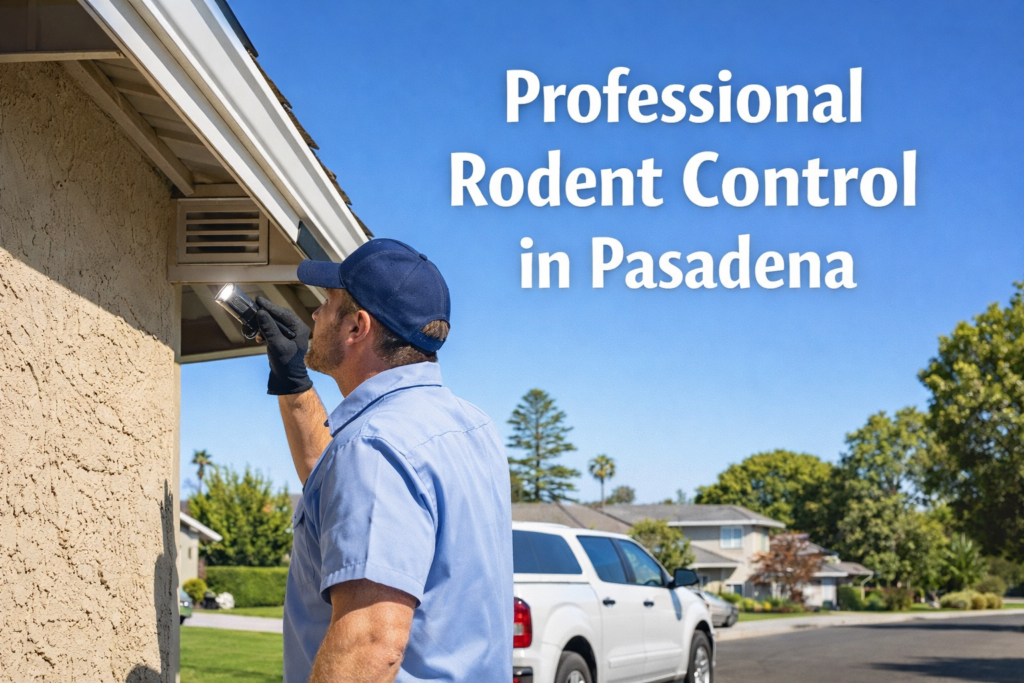
If you’re searching for rodent control in Pasadena, chances are you’re hearing scratching above the ceiling, finding droppings in the garage, or noticing chew damage around pipes and vents.
Rodents aren’t just “annoying.”
They contaminate insulation, damage wiring, and multiply quickly once they secure food and shelter.
In Pasadena, rodent problems are rarely random. Older homes with structural gaps,
hillside properties with concealed access points, and rooflines connected to tree canopies
create perfect entry conditions.
At All Track Exterminators, we don’t “trap and hope.” We inspect the entire property ecosystem —
how rodents are getting in, why they’re staying, and what must change so the problem doesn’t return.
Service Area: Pasadena, CA and surrounding San Gabriel Valley communities including
Altadena, South Pasadena, San Marino, Sierra Madre, Arcadia, Temple City and nearby areas.
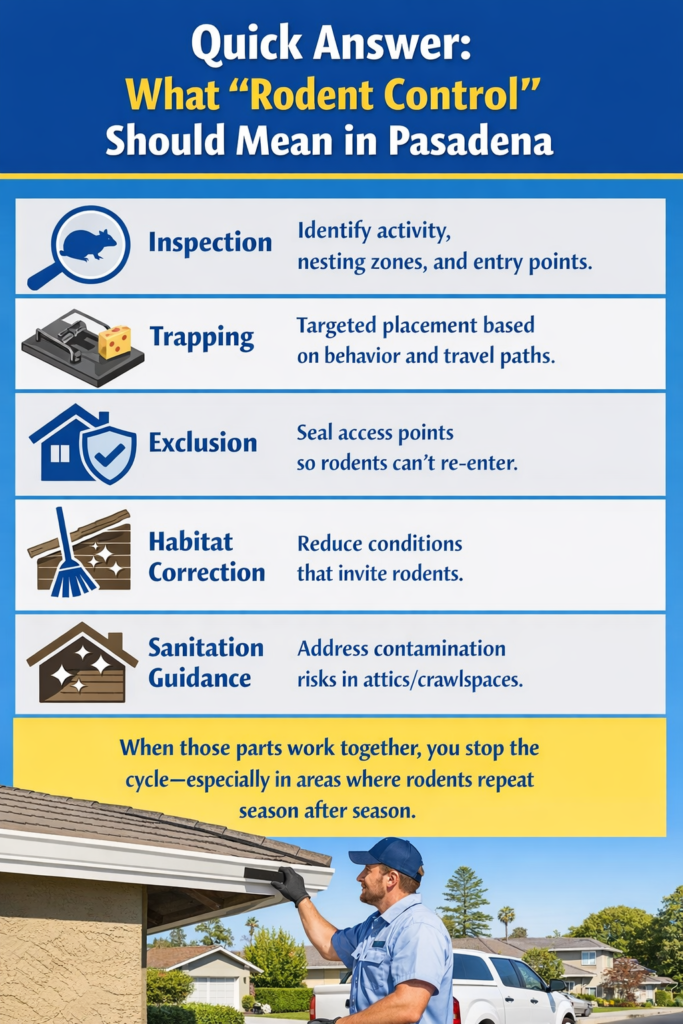
Quick Answer: What “Rodent Control” Should Mean in Pasadena
In Pasadena, effective rodent control is a combination of:
- Inspection – Identify activity, nesting zones, and entry points
- Trapping – Targeted placement based on behavior and travel paths
- Exclusion – Seal access points so rodents can’t re-enter
- Habitat Correction – Reduce conditions that invite rodents
- Sanitation Guidance – Address contamination risks in attics and crawlspaces
When those parts work together, you stop the cycle — especially in areas where rodents repeat season after season.
Why Rodent Problems Spike in Pasadena Homes and Hillside Properties
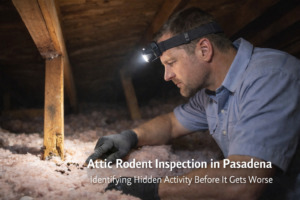
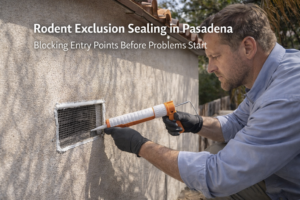
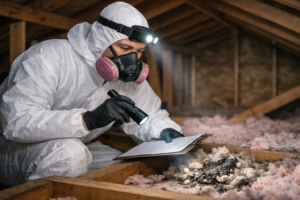
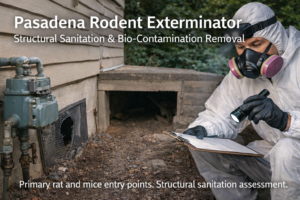
Pasadena homes—especially near foothills and hillside pockets—can experience higher rodent pressure than many
people expect. Rodents are opportunistic. If the exterior environment supports nesting and travel routes, they’ll
test the structure for weaknesses until they find a way inside.
Common Pasadena-specific drivers include:
- Roofline “bridges” from trees and overgrown shrubs
- Gaps around HVAC lines, water lines, and gas penetrations
- Older vents with weak or missing screens
- Garage door gaps and side-door thresholds
- Crawlspace access points and foundation vents
- Outdoor feeding sources (pet food, compost, fruit trees, bird seed)
After rainfall, new growth and increased vegetation can create faster travel paths, while temperature shifts can
push rodents into attics and wall voids. In other words: if your property supports the “rodent ecosystem,” the
structure becomes the next step.
PAA: What Is the Most Effective Rodent Control?
The most effective rodent control is Integrated Rodent Management—not a single tool.
Traps (including snap traps when used correctly) can be highly effective, but the long-term win comes from
removing access and changing the conditions that allow rodents to return.
Here’s the “effective” breakdown:
- Targeted trapping in the right locations based on droppings, rub marks, and travel lanes
- Entry-point sealing so new rodents can’t replace the removed ones
- Food and shelter reduction outdoors (trim, clean-up, secure bins, manage feeding sources)
- Attic/crawlspace assessment if contamination is present
In Pasadena, we regularly find that the most “effective” rodent control is the combination of
trapping + exclusion. Trapping reduces current activity; exclusion stops the next wave.
PAA: What Are Three Signs That You Have a Rat Infestation?
Three common signs of a rat infestation are:
- Droppings (often found along walls, near stored items, in garages, attics, or crawlspaces)
- Noises (scratching, scurrying, thumping—especially at night in attics or walls)
- Gnawing and rub marks (chew damage on wood/plastic, dark smears along travel routes)
Additional signs include shredded nesting material, urine odor, greasy footprints on dusty surfaces, and
pet behavior changes (staring at walls, agitation at night, barking at attic spaces).
If you see droppings and hear movement, don’t wait. Rat activity can escalate quickly—especially when nesting
becomes established in an attic or structural void.
PAA: How Do You Know If Rats Are in Your Walls?
If rats are in your walls, you’ll usually notice nighttime movement—scratching, gnawing,
or quick scurrying behind drywall. You may also see:
- Droppings in adjacent areas (garage corners, utility rooms, behind appliances)
- Chew marks near plumbing penetrations or baseboards
- Grease marks along edges where they travel
- Odor that appears stronger in enclosed areas
In Pasadena, wall activity is often connected to attic access (roofline entry) or
crawlspace access (foundation routes). A proper inspection looks at the outside first:
the entry points usually tell the story.
PAA: What Time of Year Are Rats Most Active in Pasadena?
Rats can be active year-round in Southern California, but many Pasadena homeowners see spikes during:
- Cooler months (rodents seek warmth and stable shelter indoors)
- After rainfall (changes in outdoor habitat and food patterns)
- Seasonal landscaping changes (overgrowth creates roofline access and hiding zones)
The “most active” time is often when rodents are deciding whether your home is a better shelter than outside.
That’s why exclusion sealing before peak pressure can prevent a full infestation.
PAA: How Much Does a Rat Exterminator Cost in Pasadena?
Rat exterminator cost in Pasadena can vary widely because the real cost depends on
what the property needs, not just “how many rats.”
The cost is typically influenced by:
- Inspection complexity (attic access, crawlspace access, multi-level structures)
- Trapping plan (number of traps, service visits, monitoring period)
- Exclusion requirements (number of entry points, roofline/vent work, garage gaps)
- Contamination level (soiled insulation, droppings, odor, nesting zones)
- Property environment (hillside pressure, landscaping density, nearby nesting habitat)
If you’re comparing quotes, make sure you’re comparing the same scope:
trapping only vs. trapping + exclusion vs. full remediation.
The cheapest option often becomes the most expensive when rodents return.
If you want a clear number for your situation, the fastest path is a structured inspection—so the plan matches
the real cause of activity on your property.
PAA: Why Is Rat Control So Expensive?
Rat control can feel expensive because effective work involves more than placing a few traps.
In Pasadena, professional rodent control often includes:
- Time-intensive inspection to find entry points and nesting zones
- Safe, strategic trapping based on rodent travel behavior
- Structural sealing (roof vents, attic access points, pipe gaps, crawlspace vents)
- Contamination considerations (droppings, urine, soiled insulation)
- Follow-up monitoring to confirm activity has stopped
The “expensive” part is usually the part that actually prevents recurrence: exclusion.
If you remove rodents but leave access open, the next rodents simply take their place.
PAA: Is It Safe to Live in a House With Rats?
It’s not considered safe to ignore rat activity in a home. Rats can create real health and property risks:
- Contamination from droppings and urine (especially in attics and crawlspaces)
- Air quality issues when insulation and dust become contaminated
- Electrical damage from gnawing on wiring (fire risk)
- Structural and stored item damage from chewing and nesting
If you suspect rats in an attic, wall void, or crawlspace, handle it quickly—especially if you have children,
elderly residents, or anyone with respiratory sensitivity.
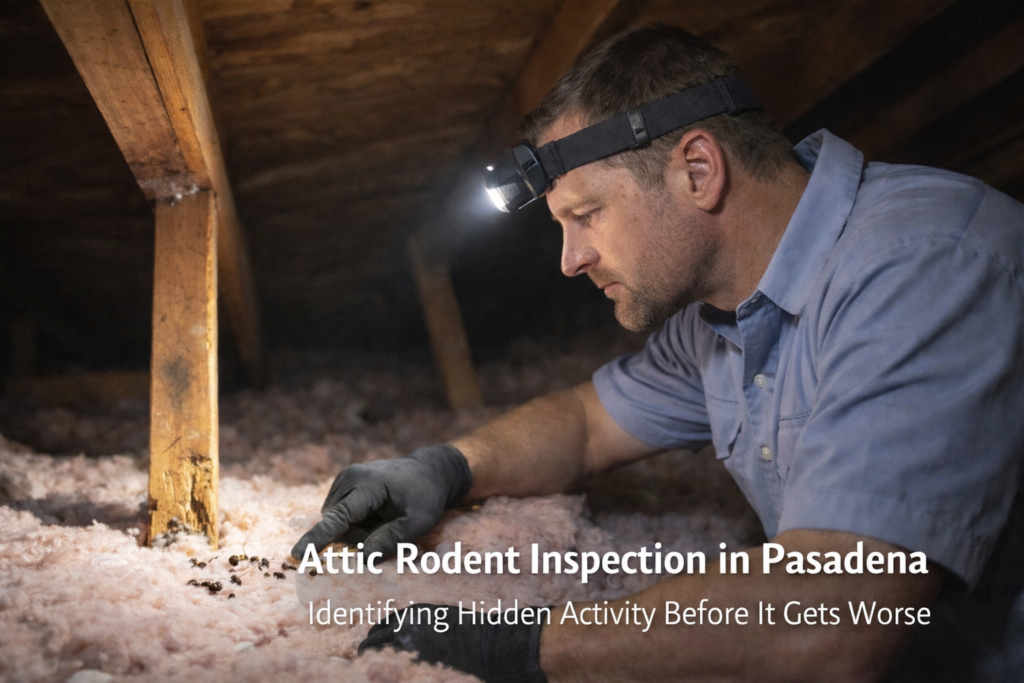
How All Track Exterminators Handles
Rodent Control in Pasadena
Our structured process is designed to stop current activity and prevent the next wave.
1) Exterior “Ecosystem” Inspection
We begin outside, where rodent pressure originates. We evaluate landscaping density,
roofline bridging, food sources, burrowing signs, rub marks, droppings, and structural
gaps that allow intrusion.
2) Interior Activity Mapping
We identify the strongest activity zones—attic, garage, wall voids, crawlspace,
and storage areas. Travel routes determine where targeted trapping will be most effective.
3) Targeted Trapping & Monitoring
Traps are placed according to rodent behavior patterns—along edges, behind objects,
near droppings, and within established travel paths. Monitoring confirms activity reduction.
4) Exclusion Sealing – The Long-Term Protection Step
We seal structural vulnerabilities including vents, roofline gaps, pipe penetrations,
garage gaps, and crawlspace openings to prevent repeat intrusion.
5) Attic & Crawlspace Risk Guidance
If contamination is present, we provide guidance on safe next steps so hidden
health risks are not left inside the structure.
Rodent Control vs. Rodent Proofing in Pasadena: What’s the Difference?
Rodent control focuses on removing active rodents and stopping current activity.
Rodent proofing focuses on preventing intrusion with structural sealing and access control.
The best results come from combining both:
- Control reduces current population and activity
- Proofing prevents replacement rodents from moving in
If you want long-term relief in Pasadena, rodent proofing is often the “missing piece” after trapping.
Common Entry Points We Find in Pasadena Homes
- Roof vents with weak screens or damaged covers
- Eave gaps and fascia openings along the roofline
- Plumbing penetrations under sinks and behind appliances
- Garage doors and side door thresholds with visible gaps
- Crawlspace vents with missing screens or large openings
- Utility line entry points where lines meet exterior walls
Even small gaps can become entry points. Mice can fit through openings much smaller than most homeowners expect,
and rats exploit structural weaknesses along edges, corners, and roofline transitions.
What You Can Do Right Now (Before a Technician Arrives)
If you’re dealing with active rodent activity and want to reduce risk immediately:
- Secure food (pet food in sealed containers, clean up crumbs, store pantry items safely)
- Remove outdoor attractants (bird seed, exposed compost, fallen fruit)
- Reduce hiding zones (trim overgrowth near walls and roofline)
- Document signs (photos of droppings, entry points, chew damage)
- Avoid disturbing droppings without proper precautions—especially in attics
If you’re unsure what you’re seeing, we can help you confirm whether the issue is rats, mice, or another wildlife
intruder—so the plan matches the threat.
Rodent Control Pasadena FAQ (Fast Answers)
How long does rodent control take?
Timing depends on activity level and access. Some situations improve quickly with trapping,
but long-term control usually requires sealing entry points after activity is reduced.
Do you offer emergency rodent control in Pasadena?
If you’re hearing strong activity in an attic or have urgent concerns, contact us for the fastest available scheduling.
Emergency needs are common when rodents invade attics, kitchens, or wall voids.
Will rodents come back after trapping?
They can—if entry points remain open. That’s why exclusion is often the difference between short-term relief and
long-term results.
What’s the best “near me” solution?
The best local solution is a company that can inspect, trap, and seal entry points—so the problem doesn’t repeat.
Look for a clear plan, not just a quick trap drop.
Rodent Control Pasadena: Get Help from
All Track Exterminators

Stop the Rodent Problem at the Source
If you’re hearing activity in the attic or seeing signs of rodent intrusion,
don’t wait until contamination or structural damage increases.
Schedule a professional rodent inspection in Pasadena today.
If you need rodent control in Pasadena, we’re ready to help you identify the cause,
stop active infestation, and prevent recurrence with a structured plan.
All Track Exterminators
1055 E Colorado Blvd, Pasadena, CA 91106
Phone: (626) 344-2464
Next step: Call now or request an inspection so we can confirm activity type,
locate entry points, and build a rodent control plan that fits your property.
Related services:
All Track Exterminators | Emergency Pest Control Pasadena | Attic Rodent Cleanup & Contamination | Rodent Proofing / Exclusion Sealing


