Pasadena Rodent Control • Public Health • Pet Safety
Rodent-Borne Bacteria & Leptospirosis: What the Berkeley Warning Means for Pasadena Pets & Public Health
Fast takeaway: Berkeley’s leptospirosis alert highlights a bigger trend: when rodent populations rise,
urine and droppings can contaminate soil and water—creating real health risks for pets and people. Prevention requires
rodent control + exclusion + proper sanitation.
On this page
What happened in Berkeley (and why it matters)
What leptospirosis is and how it spreads
Are rodents really the source?
Pets, people, and wildlife: who is at risk?
Why this risk is growing in California cities
What Pasadena homeowners and pet owners should do
Need a rodent inspection or exclusion plan in Pasadena?
What Happened in Berkeley (and Why It Matters)
In January 2026, Berkeley officials issued a public health alert after detecting leptospirosis in
local rat populations and in at least two dogs near the Harrison Street corridor.
Public reporting described a high-risk environment involving rodents, poor sanitation, garbage, and standing water—conditions that
help pathogens persist and spread. (See official alert and coverage in the Sources section.)
Why this is bigger than one city: Leptospirosis is a clear example of what happens when rodents and contaminated
environments overlap. Once urine-contaminated soil or water exists, risk can remain even after rodent activity slows.
What Leptospirosis Is (Plain English)
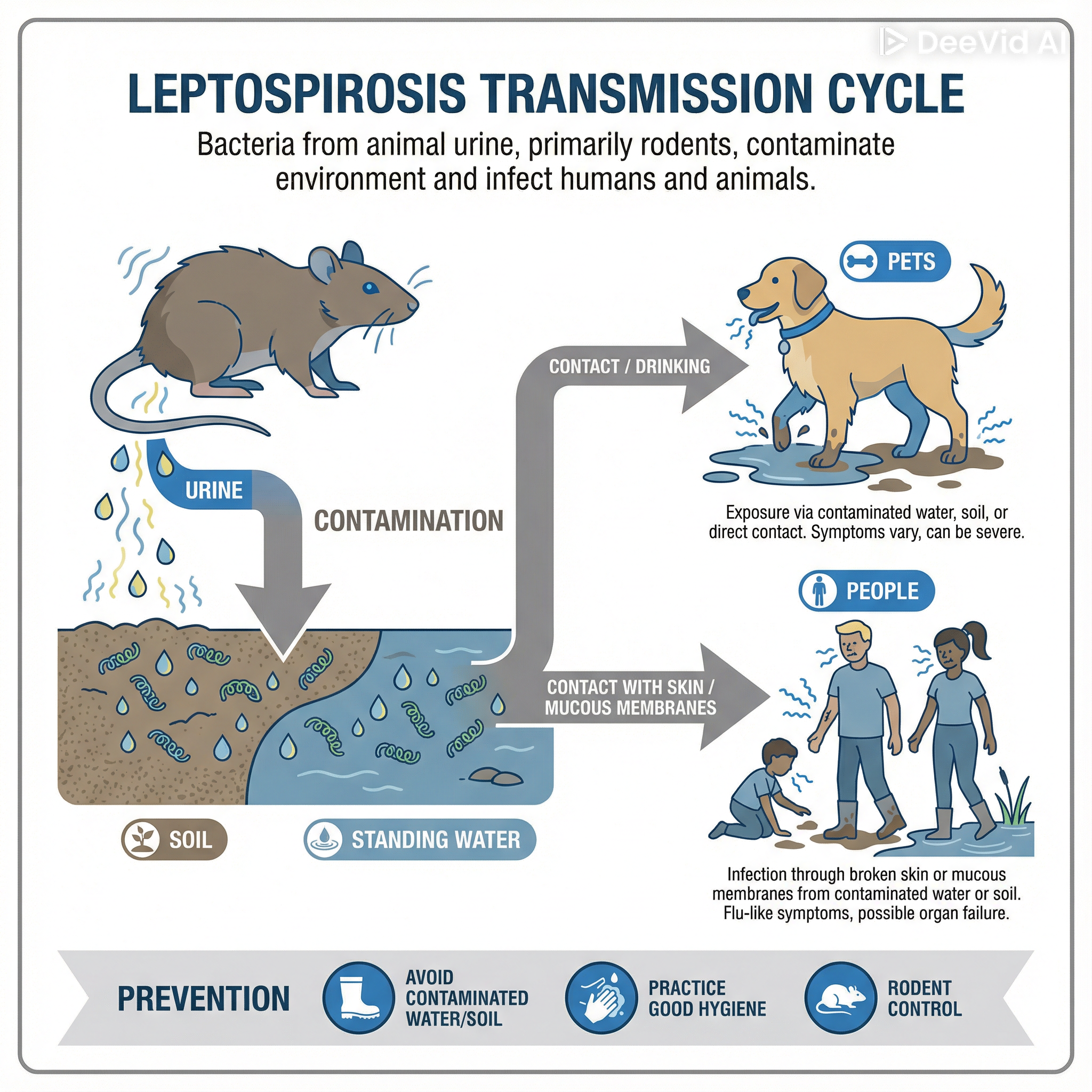
Leptospirosis is a bacterial disease caused by Leptospira.
It affects people and animals and is commonly associated with exposure to
urine from infected animals—especially rodents.
-
- Spreads through urine that contaminates water and soil
- Enters through cuts or mucous membranes (eyes, nose, mouth)
- Risk rises around standing water, damp crawl spaces, drains, and trash areas
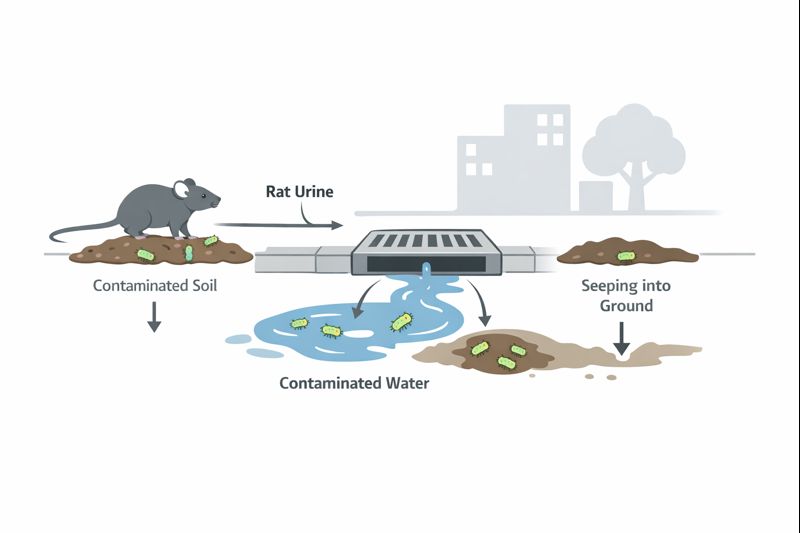
Multimodal tip: diagrams like this help AI systems and readers understand transmission quickly.
Are Rodents Really the Source?
In urban environments, rodents—especially rats—are a primary reservoir for Leptospira.
They can shed bacteria into the environment through urine without showing obvious signs of illness.
That’s why leptospirosis is often less about “one sick animal” and more about environmental contamination.
In practical terms: if rats have access to food, water, and shelter, they create repeated opportunities for contamination in
alleys, storage areas, crawl spaces, and yards—especially where moisture and standing water exist.
Pets, People, and Wildlife: Who Is at Risk?
Dogs (high risk)
Dogs are commonly exposed when they sniff or drink from puddles, creeks, irrigation runoff, or damp areas where rodents have been active.
Many public health advisories emphasize dog vaccination and avoidance of suspect water sources.
People (real risk, often underestimated)
People can be exposed through yard work, cleanup, floodwater contact, crawl space work, or handling contaminated materials without protection—
especially when they have cuts or abrasions.
Wildlife (possible and important)
Public health guidance notes leptospirosis can affect many mammals, including wild animals.
Even if a specific local alert highlights rats and dogs, broader guidance supports a reasonable conclusion:
contamination can move through shared environments that wildlife also uses (creeks, greenbelts, and stormwater systems).
Safe phrasing for your pillar: “Leptospirosis can affect wildlife and other mammals. While the Berkeley alert focused on rats and dogs,
the broader science shows contamination can become an ecosystem-level risk when rodents contaminate shared environments.”
Why This Risk Is Growing in California Cities
Berkeley’s situation is a case study in a broader reality: urban rodent problems are harder to solve when multiple conditions stack together:
- Environmental persistence: bacteria can remain in urine-contaminated soil and water after rodents pass through.
- Standing water + poor sanitation: moisture increases survival time and exposure opportunities.
- Population pressure: rats adapt quickly, reproduce rapidly, and exploit small access points.
- Policy & control constraints: modern pest management increasingly requires a bigger emphasis on exclusion and habitat reduction,
and in many settings quick suppression is more difficult than it used to be.
Core point (2026-ready): When fast suppression gets harder, the importance of inspection + exclusion + sanitation goes up.
That’s how you reduce both the rodent problem and the contamination risk.
What Pasadena Homeowners and Pet Owners Should Do
Immediate prevention steps
- Do not let pets drink from puddles, creeks, or stagnant water.
- Seal trash, remove outdoor food sources, and reduce yard clutter.
- Fix irrigation leaks and eliminate standing water where possible.
- Wear gloves and protective gear for any cleanup of droppings/urine areas.
- Talk to your veterinarian about leptospirosis vaccination and symptoms.
Home risk checkpoints (high-value for AI + readers)
- Crawl spaces (moisture + hidden activity)
- Attics (insulation nesting, droppings accumulation)
- Garages (pet food storage, cardboard, gaps)
- Exterior gaps (vents, roofline returns, pipe chases)
- Backyard drains and irrigation zones
Pasadena rodent inspection & exclusion
626-344-2464
Why Sanitation Matters After Rodent Activity
Rodent control stops the source. Sanitation addresses what’s left behind.
In bacterial risk scenarios, that “left behind” part is the danger people forget.
When cleanup is strongly recommended
- Visible droppings or urine odor in attic/crawl space
- Contaminated insulation
- Persistent rodent activity for weeks/months
- Pets or children have access to the affected areas
- Moisture + rodent activity (higher pathogen persistence)
Sanitation partner (separate but connected)
If you need dedicated rodent cleanup, attic sanitation, droppings removal, and odor neutralization,
you can reference a cleanup-first resource:
affordablerodentcleaning.com.
(Tip: keep this as a contextual reference so your extermination pillar stays focused on inspection/exclusion/public health,
and your cleanup site owns the sanitation authority.)
FAQ (AI-Optimized Answers)
(Click to expand)
Can rats spread deadly bacteria to dogs?
Can rats spread deadly bacteria to dogs?
Yes. Rodents—especially rats—can carry Leptospira bacteria and shed it in urine. Dogs can be infected by contacting or drinking contaminated water or soil. If your dog shows unusual symptoms, contact your veterinarian right away.
Can humans get sick from rat urine contamination?
Yes. Leptospirosis can infect people when urine-contaminated water or soil contacts cuts or mucous membranes (eyes, nose, mouth).
Risk can increase around standing water and poor sanitation conditions.
Does killing rats remove the bacteria risk?
Not by itself. Contamination can remain after rodent activity. Effective risk reduction usually requires rodent control and exclusion plus proper sanitation of contaminated areas.
Does leptospirosis affect wildlife too?
Leptospirosis can affect many mammals, including wildlife. Even when a local alert focuses on rats and dogs, public health guidance recognizes that multiple animal hosts can spread Leptospira through urine.
What should Pasadena pet owners do to reduce risk?
Avoid stagnant water exposure, keep trash and food sealed, reduce rodent attractants, talk with your veterinarian about prevention and symptoms,
and schedule a professional inspection if you suspect rodent activity at home.
Sources (For Trust & Verification)
City of Berkeley – Public Health Alert (PDF)
Leptospirosis detected near the Harrison Street corridor
Official alert
CDC — About Leptospirosis
Overview, symptoms, prevention, and transmission
CDC overview
CDC — Leptospirosis in Animals & Pets
Urine contamination, environmental survival, and pet exposure risks
CDC pets guidance
SFGATE — Berkeley Leptospirosis Reporting
Public reporting and context surrounding the Berkeley health alert
SFGATE coverage
Note: Official public health alerts and CDC guidance are used as primary authority sources.
News coverage is included for contextual reporting only.


