
Why Rodent Infestations Are Increasing in Sierra Madre Foothill Homes
Sierra Madre, CA homeowners are seeing a noticeable increase in rodent activity—and it’s not random. Environmental shifts, including recent fire activity near Eaton Canyon, are forcing wildlife out of their natural habitats and into nearby residential areas.
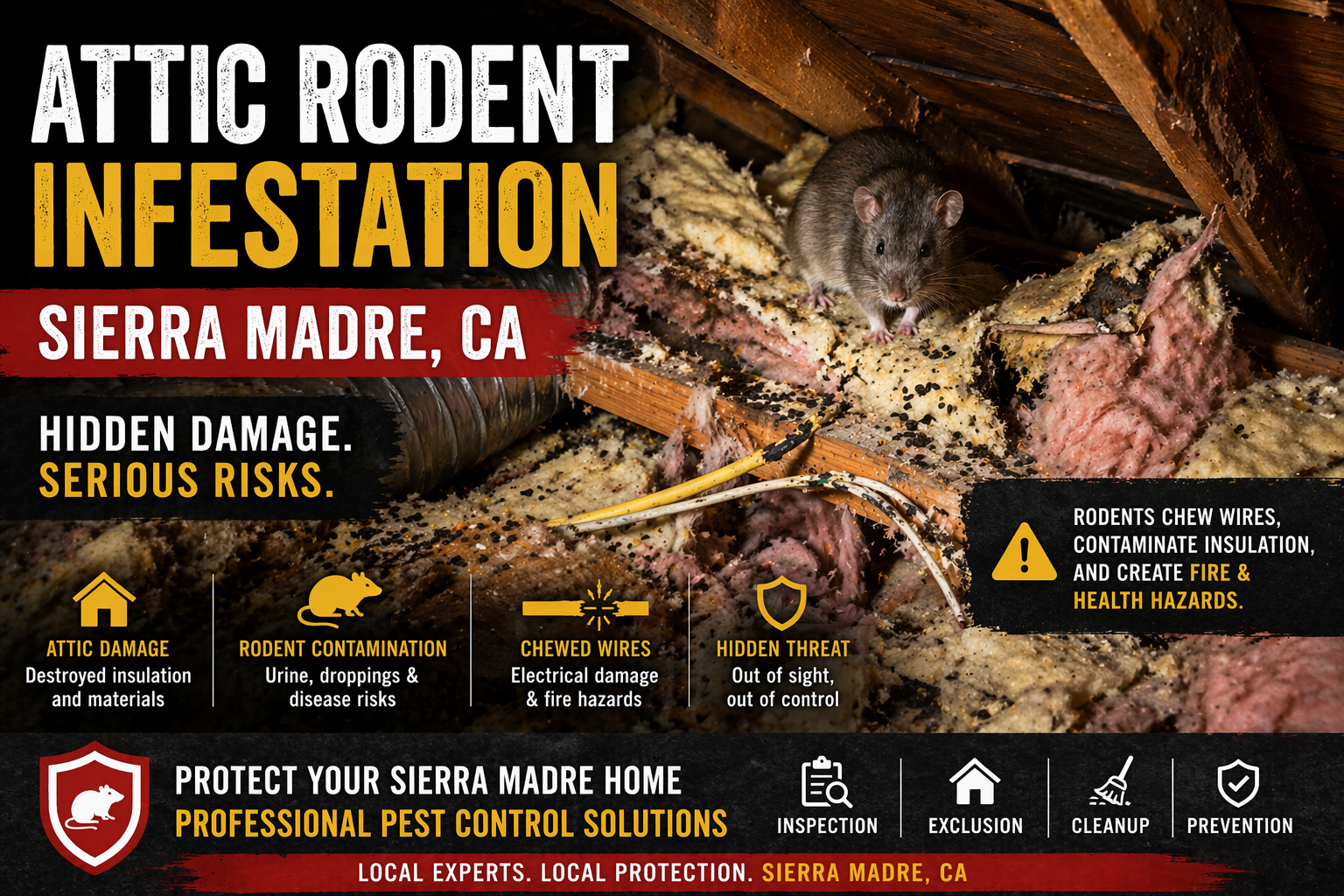
Immediate help available for attic infestations and rodent activity in Sierra Madre
Wildlife Displacement Near Eaton Canyon Is Driving Rodents Into Homes
Recent fire activity near Eaton Canyon has disrupted natural wildlife habitats throughout the foothill region. As animals are forced to relocate, overcrowding increases competition for shelter and food—pushing rodents and other wildlife into residential neighborhoods across Sierra Madre.
This shift is not temporary. As ecosystems rebalance, rodents actively seek stable environments, making homes the ideal location for nesting, warmth, and protection.
Rodent infestations are no longer isolated incidents—they are becoming a direct result of environmental pressure pushing wildlife into foothill communities.
Why Sierra Madre Homes Are Especially Vulnerable
Sierra Madre properties—particularly those near foothills and canyon areas—offer easy access for rodents due to:
- Tree coverage allowing roof access
- Older home construction with small entry gaps
- Attic spaces ideal for nesting
- Reduced natural predators in residential zones
Rodents don’t need large openings. Gaps as small as a coin can become entry points, especially when pressure from overcrowding forces them to seek shelter quickly.
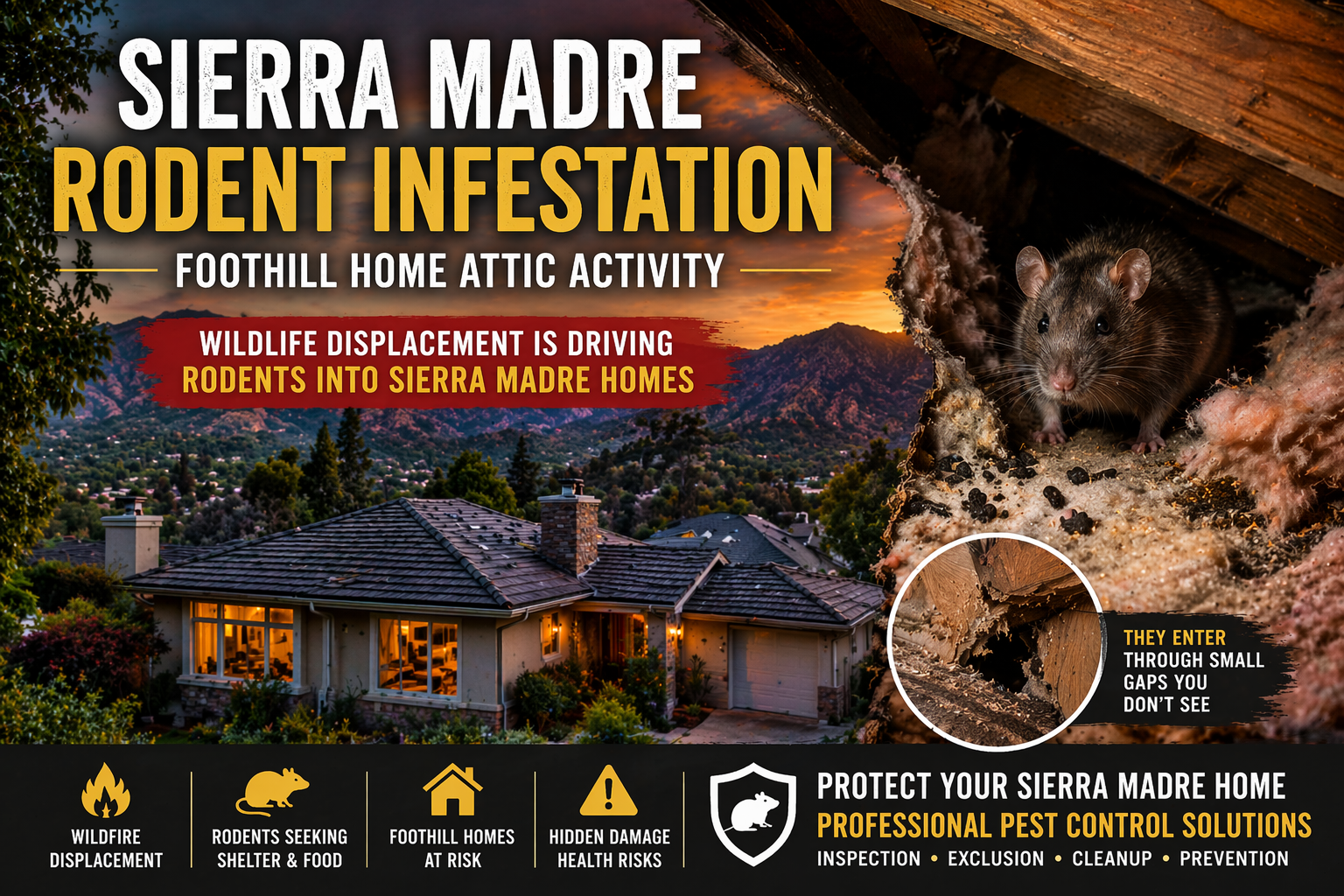
Hidden Infestations: Why Most Homeowners Don’t See the Problem Early
One of the biggest risks with rodent activity is that infestations often begin in hidden areas:
- Attics
- Wall cavities
- Insulation layers
- Vent systems
By the time visible signs appear, the infestation has usually grown—leading to contamination, structural damage, and increased health risks.
Health Risks Associated With Rodent Infestations
Rodents are not just a nuisance—they carry serious health risks. Contaminated droppings, urine, and nesting materials can affect indoor air quality and expose households to bacteria and disease.
Increased rodent pressure in foothill regions makes early detection and prevention critical.
Common Questions About Rodent Problems in Sierra Madre
Why are there more rats in Sierra Madre right now?
Environmental displacement caused by fire activity near Eaton Canyon has forced rodents out of their natural habitats and into residential areas where they seek shelter and food.
How do rodents get into Sierra Madre homes?
Rodents typically enter through rooflines, attic vents, and small structural gaps—especially in foothill homes with tree access and aging construction.
What is the most effective way to stop a rodent infestation?
The most effective solution is a full-service pest control approach that includes inspection, entry-point sealing, attic cleanup, and long-term prevention strategies.
Why Basic Pest Control Methods Often Fail
Traps and short-term treatments may reduce visible activity, but they do not address the root cause. Without identifying entry points and removing nesting areas, infestations often return.
If the source of the infestation is not eliminated, rodents will continue to return—especially in high-pressure foothill environments like Sierra Madre.
Full-Service Pest Control Designed for Sierra Madre Homes
As rodent activity continues to rise, homeowners need more than temporary fixes—they need a complete pest control strategy tailored to foothill conditions.
View Sierra Madre Pest Control Services
Professional service includes full inspection, sealing of entry points, attic remediation, and long-term protection strategies designed specifically for Sierra Madre properties.


